A vision of the night.
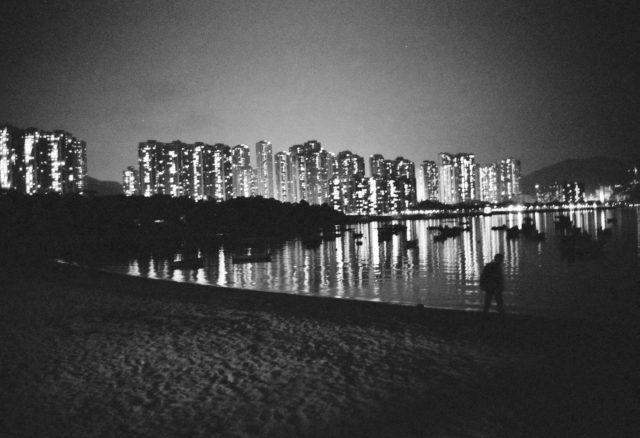
There’s usually nothing to see.

Still, we try.

It’s a time for reflection.
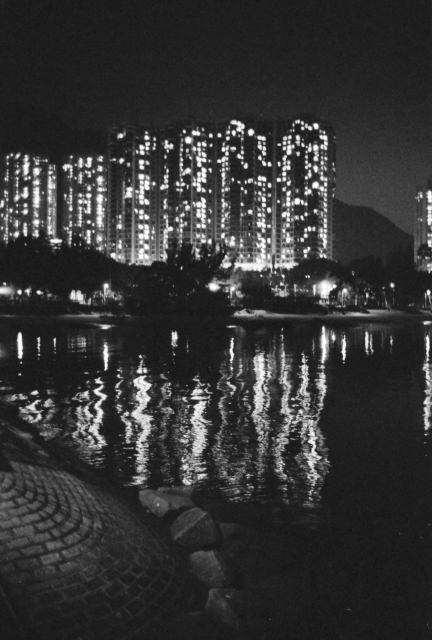
We try to think.

We sit.

And rest.
Camera: Leica M6
Lens: Voigtlander Nokton Classic 35mm f/1.4 SC
Film: Ilford XP2 400
A Thinking Street Photography Site
A vision of the night.
There’s usually nothing to see.
Still, we try.
It’s a time for reflection.
We try to think.
We sit.
And rest.
Camera: Leica M6
Lens: Voigtlander Nokton Classic 35mm f/1.4 SC
Film: Ilford XP2 400
The geometry keeps changing.
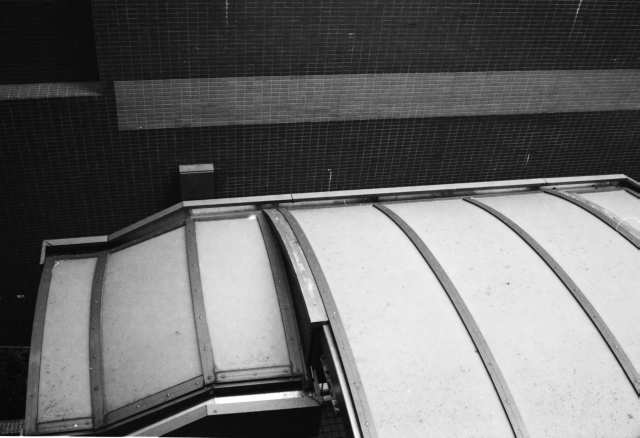
Hong Kong is a good place to be a flaneur.

Take a step and the view changes itself.
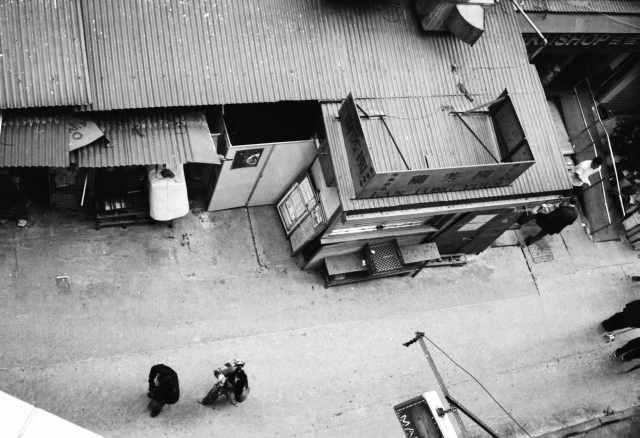
Lots to absorb.

You could stand at the same spot.

The landscape will change very quickly.

It’s easy to enjoy the view.
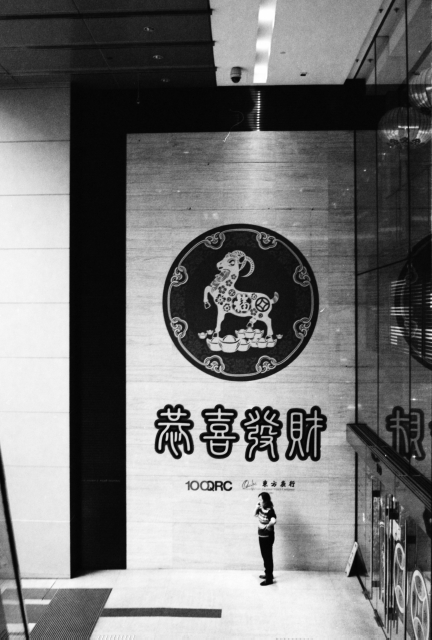
You seek out order to square the circles.

Hong Kong will come to you.
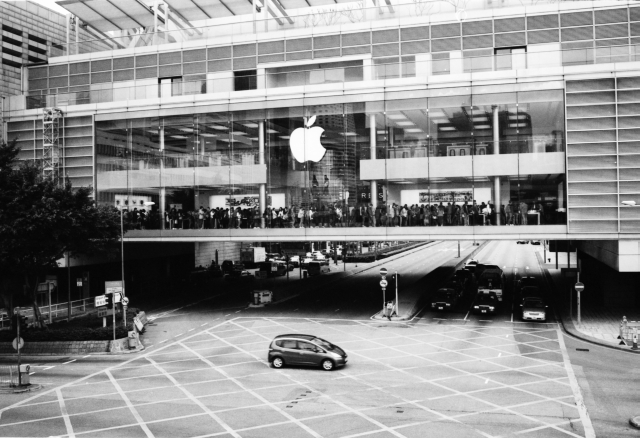
And so will the rest of the world.
Camera: Leica M6
Lens: Voigtlander Nokton Classic 35mm f/1.4 SC
Film: Ilford XP2 400
I’m fascinated by what you could see when coming down the Mid-Levels Escalator at Central in Hong Kong.
You could see lots of small businesses, restaurants and shops.

You could also see unruly leaves and branches against grey concrete buildings.
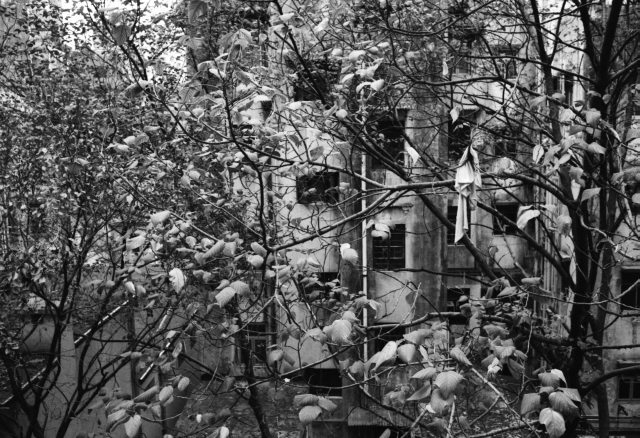
They’re part of human activity.
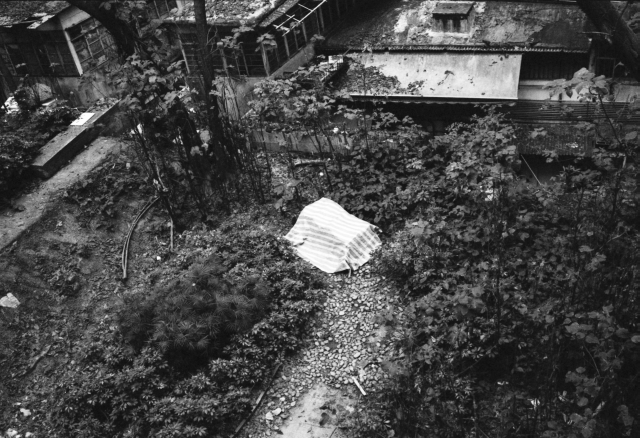
Things happen, though they don’t always announce themselves.

Life is understated sometimes.

At other times, it is in your face.
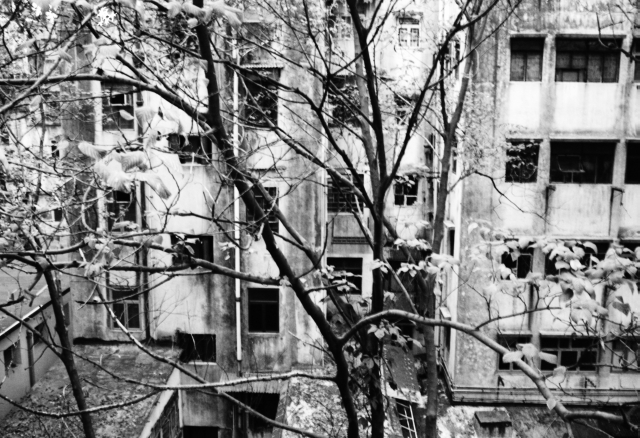
This is how concrete lives.

How we live with concrete.
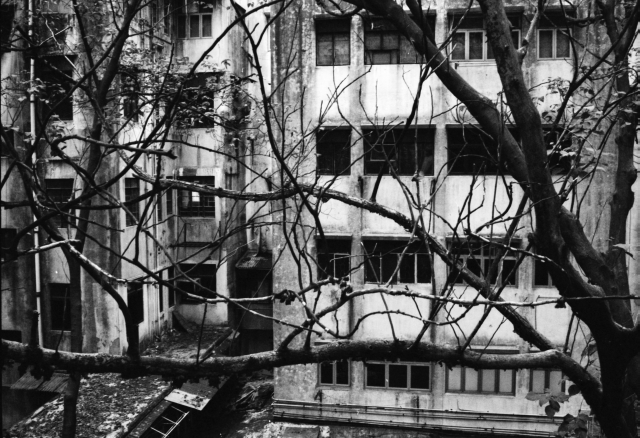
The unruly beauty of nature and concrete.

We can’t help but look again and again.
Camera: Leica M6
Lens: Voigtlander Nokton Classic 35mm f/1.4 SC
Film: Ilford XP2 400
We look again.
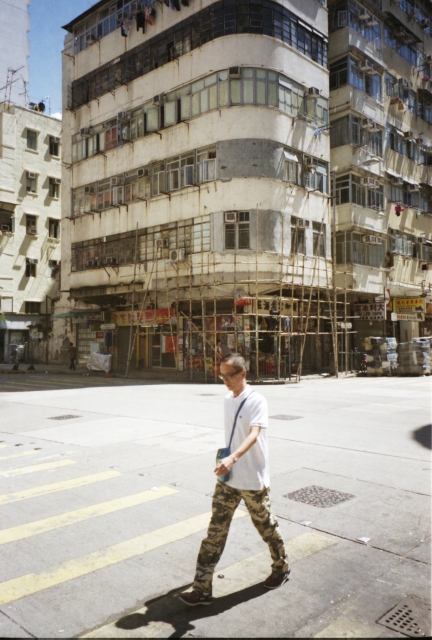
We are on a quest.

Where are the keys to our lives?
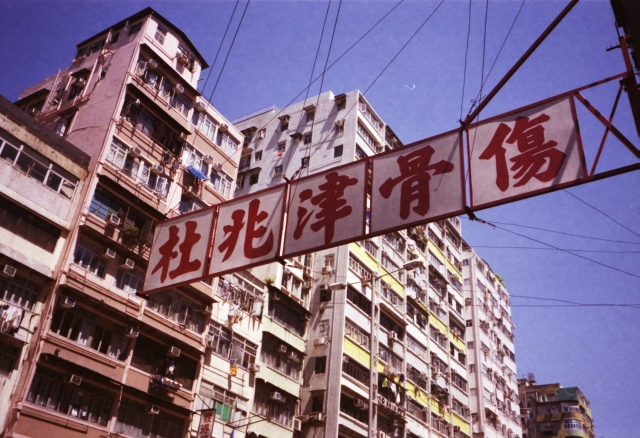
We look up.

We look again.
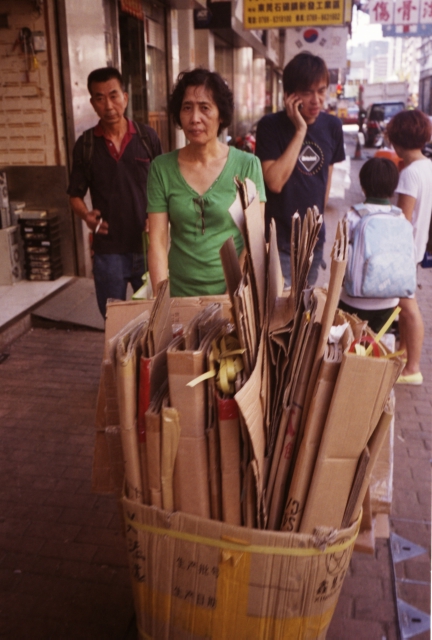
Sometimes we do not look.
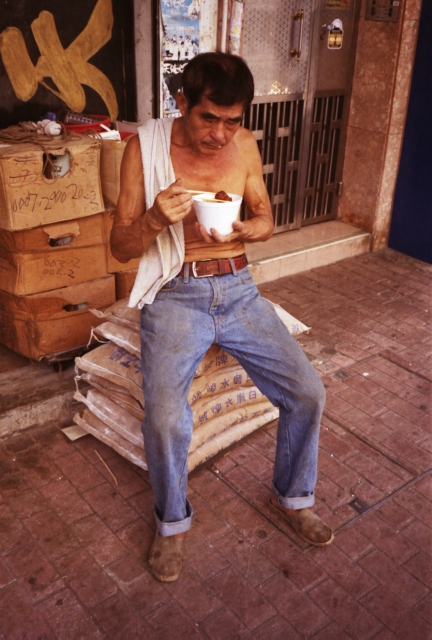
We’re too involved in ourselves.

And then you’re challenged by a look.

You look elsewhere.

Anything to recompose yourself.
Camera: Contax TVS II
Film: Fuji Superia 400
I happened to chance on a folder I tucked away a few months back.
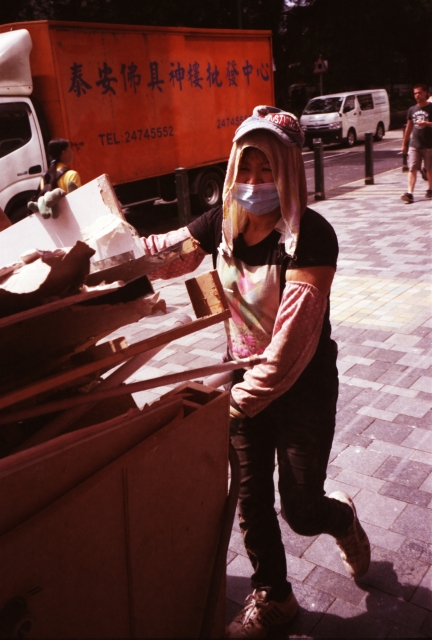
I remember not being satisfied with the pictures.

I though the colours were a bit off.
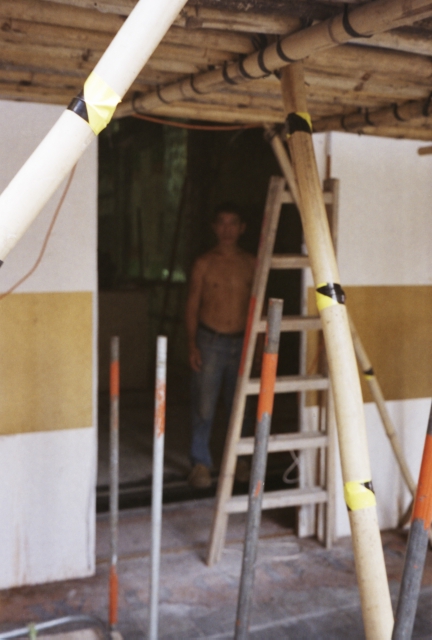
Then I looked again and decided they’re pretty okay after all.

This is Hong Kong.

This is Hong Kong.

This is Hong Kong.

Sometimes a door opens.

And we see ourselves as we truly are.
Camera: Contax TVS II
Film: Fuji Superia 400
What happens when you choose not to place people at the centre of things?

It’s a bit unsettling when humans are placed at the periphery.

We cannot help but still do so – the above is still a photograph about human activity.

Keyboards are for hands, pedals for feet.

We love our things.

We frame ourselves with things.

We wait for things.

We work with things.

We are things.

Some things out-wait us.
Camera: Spotmatic F
Lens: Super-Multi-Coated Takumar 35mm F 3.5
Film: Fujifilm Superia Venus 800
Wallace Stevens: “You have a blue guitar,/ You do not play things as they are.”

I suppose the whole point of the visual arts is to get us to see things as they otherwise are.

And perhaps be unlikely.

Wallace Stevens: “Things as they are/ Are changed upon the blue guitar.”

This is not a bicycle.

This is not a ladder.

These are not sacks waiting to be moved.

Things as they are not are directions and lines of force.

Things as they are not are relationships between lines, textures, and light.

With things as they are not, we learn the background of things.
Camera: Spotmatic F
Lens: Super-Multi-Coated Takumar 35mm F 3.5
Film: Fujifilm Superia Venus 800
I was in Singapore for a short working trip, presenting a paper called “The Poetics of Occupy Central – A Photo Essay” at an academic conference.
So of course I brought my camera along.

I spent an evening on my own, a day before wifey joined me at the hotel.
So of course I did the most natural thing that came to me – I pretended to be a tourist at VivoCity.

Darn – I can’t seem to fit a filter on my lens without it vignetting (see top corners).

It seems like my Voigtlander 35mm doesn’t like filters.

I’ve tried a B+W filter, and a Hoya filter as well. They both vignette.
I would be grateful for any advice from readers more knowledgeable than me in this respect.

Crowded shopping malls depress me.

There was a bridal fair – and you realize weddings are very regimental affairs.

Everyone (including myself) is searching for life’s defining moments in a cookie-cutter manner.

There’s a water park of sorts above the mall.

The feeling here is more carefree.

But such scenes are possible only because of the packed shopping crowd below.
They are paid for by all that buying and selling that happens below.

We all buy and sell in our cookie-cutter lives so as to achieve moments like the one above.

Of course, it’s not just Singapore or VivoCity that does this.
One could never be truly outside of VivoCity, even if one leaves.
Thanks for reading.
Camera: Leica M6
Lens: Voigtlander 35mm F 1.4 Nokton SC
Film: Kodak Bw400CN
So – vision, shot precision, follow through.

As with weapons training (see previous post), so it is with street photography.

It’s giving me an insight as to what constitutes expertise.

There is expertise that comes with knowledge of the field – where you’re situated, what you have to offer in relation to what other people in your field have to offer, how it all fits in with what society (and the market) demands, and whether or not (or how) you would adjust to that demand.

Related to that, there’s the kind of expertise (i.e. skills) that can only come with painstaking preparation, training, multiple failures, as you move from naivete and self-ridicule to familiarity and finally (hopefully) to mastery.

It’s a journey from innocence to experience.

And with experience, hopefully, one could be innocent all over again.

You don’t truly master anything. As you can see, I’ve read my William Blake.

Do I dare disturb the universe? (I’m quoting T. S. Eliot here.)
The above gentleman spotted me right after I took the shot.
He put on his hat, walked right up to me, snarled, laughed, tapped my shoulder, and then walked away.
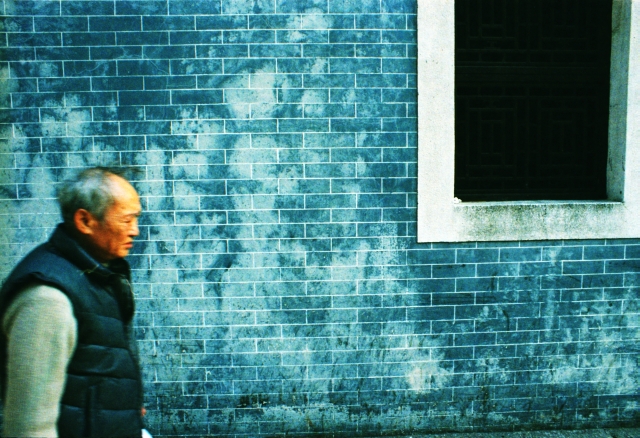
So naturally I felt compelled to carry on.

I stood at one spot and aimed at the wall.

I’m really not sure why I do things like this.

I suppose this is where art comes from.
Camera: Honeywell Pentax Spotmatic F
Lens: 24mm S-M-C Takumar F 3.5
Film: Kodak UltraMax 400
Holding a Spotmatic F reminded me of my first encounter with an M16 rifle.

Could something that felt so clunky really work?

After having learnt how to disassemble the rifle and put it back together, I felt no better.

It looked suspiciously uncomplicated – I actually understood how the rifle worked.

How could that clicking sound when I pull that trigger be taken seriously?

As I eventually discovered, after zeroing that rifle (aligning the sights to my eye for projectile accuracy) at a 300m range, it was powerful indeed, and not something to be taken lightly. I’ve never forgotten that feeling (and the recoil).

It’s the same with a camera – after all, it involves training, preparation, positioning, proper gripping, sighting and shooting.

And you’ll need to control your breathing to maximize shot accuracy.
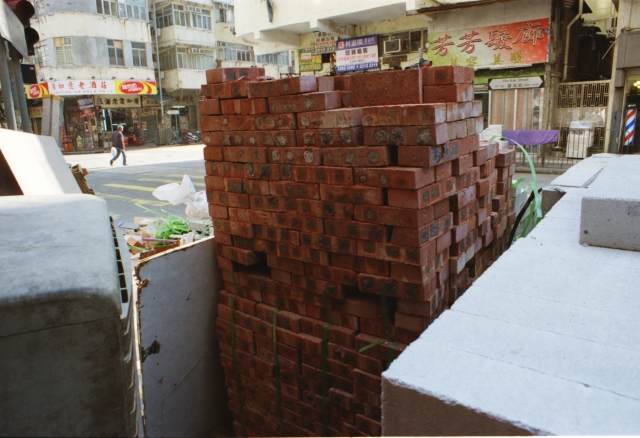
The rifle (and camera) is supposed to be an extension of your self and will.

Did I mention I was a marksman in my previous life (2 decades ago)?
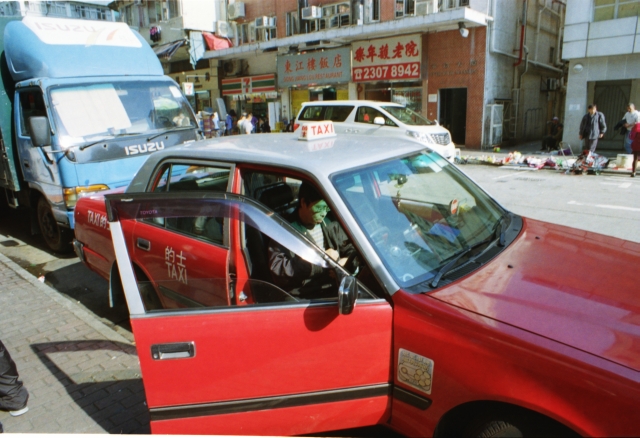
In case you think I’m some kind of gun-crazy nut, it’s actually a common experience, if you’re a combat-fit Singaporean male who had to do national service (30 months of it in my time).

As you can see, I’m sublimating all that weapons training, channelling it into street photography.

It’s all about vision, discipline and decision points.
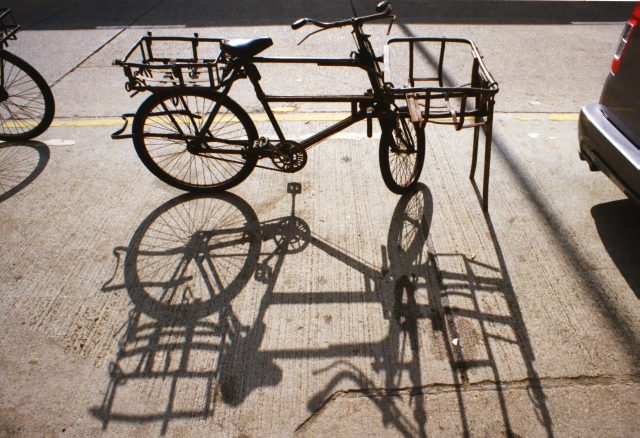
You are what you shoot.
You are how you shoot.

Street photography, especially with film cameras, have taught me to respect mechanical tools and appreciate the history that came with them.
The evolution of Leica, Asahi Pentax, Voigtlander, and so on, is a history of modern life.
It is this history that gave us our Henri Cartier-Bresson, Vivien Maier, Diane Arbus, Martin Parr, Bruce Gilden, etc.
Thanks for reading.
Camera: Honeywell Pentax Spotmatic F
Lens: S-M-C Takumar 24mm F 3.5
Film: Kodak UltraMax 400
 Hong Kong Lucida