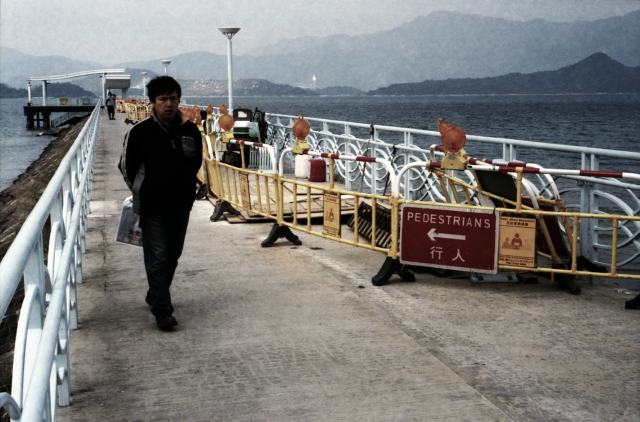
Blog

The Metropolis and Mental Life

The deepest problems of modern life derive from the claim of the individual to preserve the autonomy and individuality of his existence in the face of overwhelming social forces, of historical heritage, of external culture, and of the technique of life. (“The Metropolis and Mental Life” p. 409)

All quotations here are taken from Georg Simmel (from The Sociology of George Simmel, translated and edited by Kurt H. Wolff, The Free Press, 1950), whose writings I dip into once in a while because it’s still so potent as a commentary on how modern city life affects the way we think and feel. We don’t see these effects, just as a fish fails to see the water it swims in.

IMG_20140327_0050 640

Modern mind has become more and more calculating. The calculative exactness of practical life which the money economy has brought about corresponds to the ideal of natural science: to transform the world into an arithmetic problem, to fix every part of the world by mathematical formulas. Only money economy has filled the days of so many people with weighing, calculating, with numerical determinations, with a reduction of qualitative values to quantitative ones. (“The Metropolis and Mental Life” p.412)

I guess the vulgar word for me is “positivism” – the idea that it is possible to come up with consistent and reliable formulas to how life works. Formulas are re-assuring, such as “be a banker/lawyer/accountant/doctor, because these jobs translate into big numbers, and these big numbers mean success”.

Of course, there are many successful bankers/lawyers/accountants/doctors who lead meaningful lives and who enjoy their jobs. I’m only arguing against the confusion between quality and quantity. Quality cannot be easily quantified. Sometimes we play this soundtrack too readily.
IMG_20140327_0046 640

IMG_20140327_0047 640

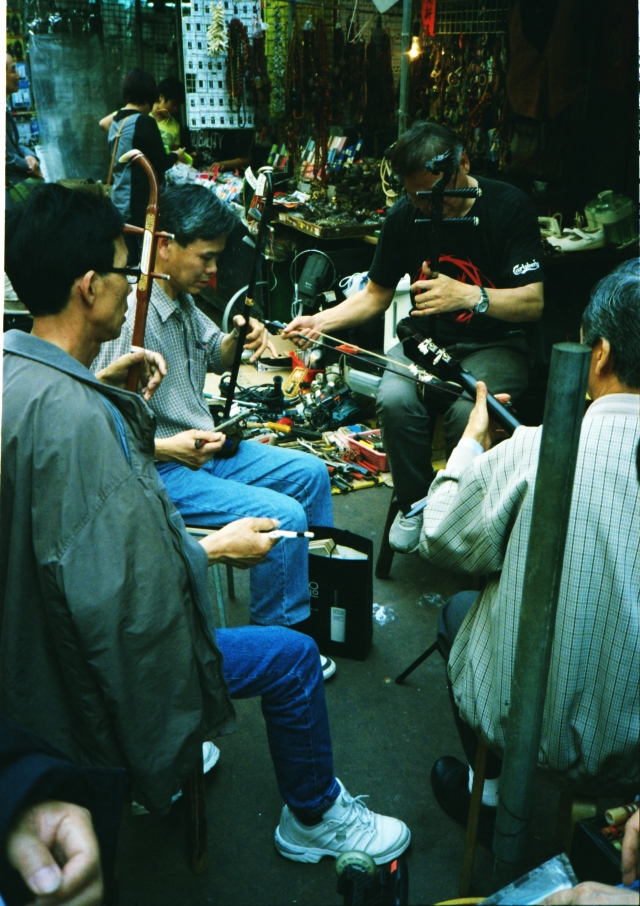
Here in buildings and educational institutions, in the wonders and comforts of space-conquering technology, in the formations of community life, and in the visible institutions of the state, is offered such an overwhelming fullness of crystallized and impersonalized spirit that the personality, so to speak, cannot maintain itself under its impact. On the one hand, life is made infinitely easy for the personality in that stimulations, interests, uses of time and consciousness are offered to it from all sides. They carry the person as if in a stream, and one needs hardly to swim for oneself. On the other hand, however, life is composed more and more of these impersonal contents and offerings which tend to displace the genuine personal colorations and incomparabilities. This results in the individual’s summoning the utmost in uniqueness and particularization, in order to preserve his most personal core. He has to exaggerate this personal element in order to remain audible even to himself.  (“The Metropolis and Mental Life” p. 422)

I’ve always found the above passage to be rather depressing. The modern concern with the uniqueness of our personality emerges out of an anxiety. Now that everything is for sale, we’re compelled to be “unique”, “autonomous” and “individual” so as to differentiate ourselves from other cogs in the giant capitalist machine. “Look at me I’m so unique and interesting,” I tell myself and others, knowing that there are tens of thousands of people around me (and many with blogs like this) saying precisely the same thing.
IMG_20140327_0045 640

IMG_20140327_0055 640

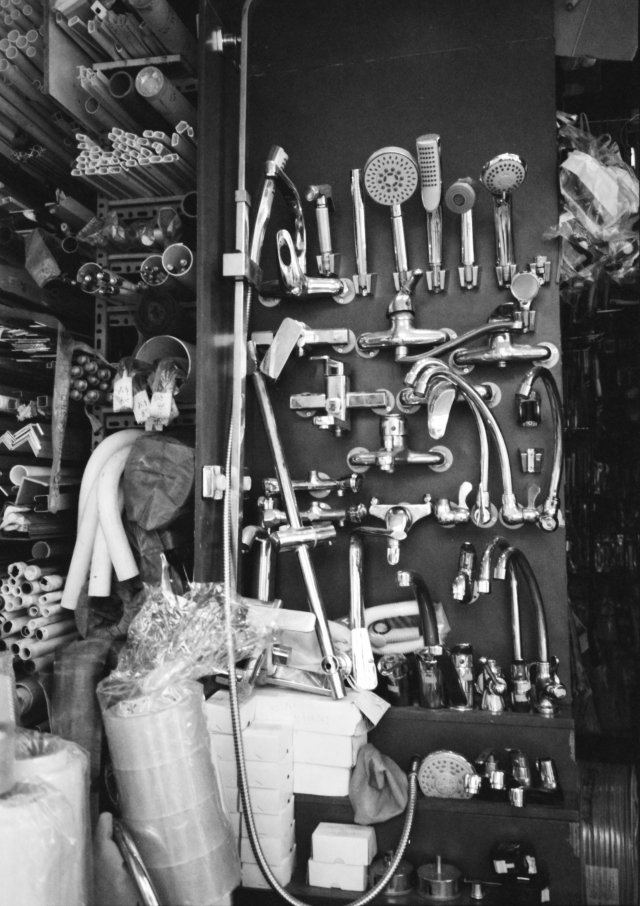
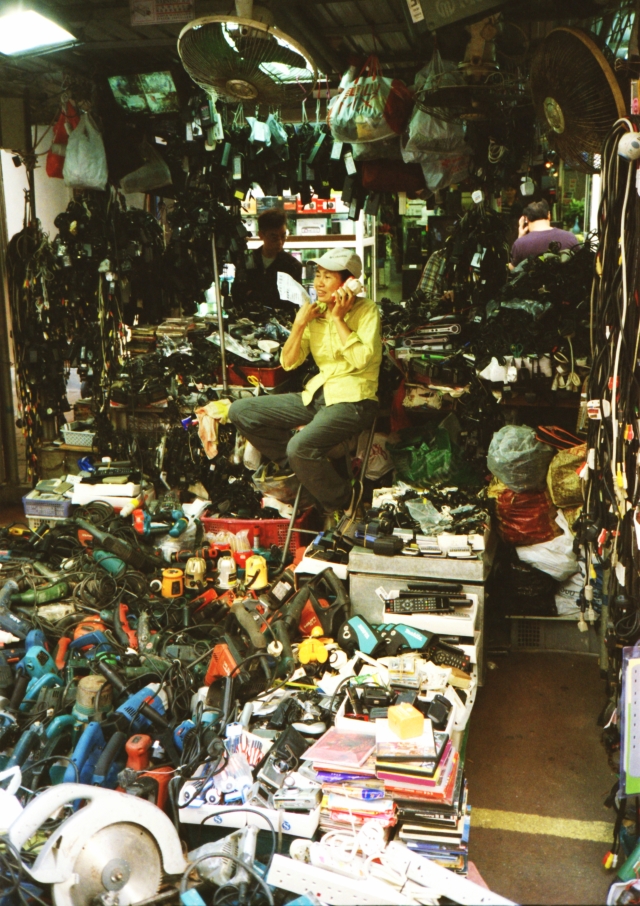
We are surrounded by things we buy with numbers. And these things, whether tangible or intangible, which we buy and sell, turn us into who we are.

Is it possible to walk away from such a situation?
IMG_20140327_0063 640

IMG_20140327_0074 640


Contax TVS

In a previous post on the snapshot aesthetic, I mentioned zone focusing with Olympus XA2 and auto-focusing with Minolta AF-C.

And now, ladies and gentlemen, behold my Contax TVS. It has an aperture priority mode and a program mode. There’s auto-focus (which you could override with a dial).

IMG_20140327_0002 640

This allows me to be more stealthy, and the motorized whirring is not too loud.

I consider the Contax TVS series to be the baby brother of the Contax T1/2/3 series of which T2 is much celebrated, or the Contax G series of cameras.

It has the Vario Sonnar lens which allows for zooming, for days when I’m too lazy to zoom with my feet.

IMG_20140327_0005 640

This lady popped out and I responded quickly enough…

IMG_20140327_0011 640

“Oops, what’s this?” I thought as I was looking at the negative.

The panoramic mode was activated without me knowing.

IMG_20140327_0027 640

Oh oh …

IMG_20140327_0041 640

Hm.

The panoramic mode is basically a cropping of the frame by the camera, and the panels were unhinged.

IMG_20140327_0028 640

I felt there was an intuitive bond between me and the Contax TVS… was I imagining things?

It’s built like a tank, and I could take myself seriously when I’m holding it… I was so looking forward to serious days…

After a moment of reflection and in that rare moment of sanity, I returned the camera to the store.

There were 2 Nikon 35Ti‘s beckoning, and a Fuji “sardine can” Tiara as well.

It was then that I had a Prufrockian moment:

Do I dare disturb the universe?

In a minute there is time

For decisions and revisions which a minute will reverse.

I waved goodbye (in my mind only) to those cameras.

The person at the store kept my number, noted my mournful expression, and 3 days later, I was told there’s another Contax TVS in the store, this one with the original strap, manual (in Japanese), case and lens cap.

I took it out for a spin.

IMG_20140401_0006 640

Woohoo!

IMG_20140401_0005 640

The panoramic mode here was fully intended. This was the only panoramic shot I took. I don’t expect to use it much. It’s a bit tacky I think…

IMG_20140401_0014 640

Happy happy joy joy.

IMG_20140401_0026 640

All is fine – I tilted the camera and shook it this way and that to see if the panoramic mode would kick in.

IMG_20140401_0028 640

I zoomed in and out and it’s fine.

IMG_20140401_0032 640

Zooming in … and it’s still ok.

IMG_20140401_0036 640

Yup, we have a winner here.

The Force is strong with this one…

O happy day!

Stories and Things

We can’t help but tell stories.

There’s a story to be told here about directions, linearity and tension.

IMG_20140320_0012 640

And here about the value we give to things.

IMG_20140320_0022 640

Here, we see possibilities…

IMG_20140320_0025 640

And here, we read.

IMG_20140320_0027 640

Is this an image of ourselves, caught living in our own fish tanks?

IMG_20140320_0031 640

Is this where we go in the end?

IMG_20140320_0032 640

Or is there someone upstairs, waiting for us?

IMG_20140320_0044 640


The Snapshot Aesthetic

I’ve been using Olympus XA2 for quite some time now and have been mulling over how zone focusing allows me to compose more quickly.

I happened to come across the lesser-known Minolta AF-C and yes, it’s auto-focus.

IMG_20140327_0038 640

Load it with Kodak UltraMax 400 and it’s pure joy if you’re pursuing a snapshot aesthetic.

You could focus really quickly and the saturated colours would work for those with a taste for lomography.

IMG_20140327_0037 640

The word “snapshot” hints of amateurism, and I suppose it goes against the conventional rules of professional photography concerning proper framing and lighting, etc.

There’s a scholarly article here on how the snapshot aesthetic is being used to persuade in advertising photography.

You could say that commercial photographers have appropriated the style of the amateurs.

The entire style (and persona) of Terry Richardson, right down to his use of non-professional cameras, is based on this approach.

On the other hand, it also has also allowed the work of folks like Lee Friedlander and Garry Winogrand to be taken seriously by the establishment.

IMG_20140327_0036 640

Me, I like the reds and greens.

IMG_20140327_0048 640

I suppose there’s something covert about street photography in that it is aligned with the transgressions of street art.

IMG_20140327_0051 640

IMG_20140327_0057 640

It’s true that I tend to take photographs of people in candid moments.

When I’m in the zone, I’ve become quite adept at reading body language and tracking eye movements…

IMG_20140327_0062 640

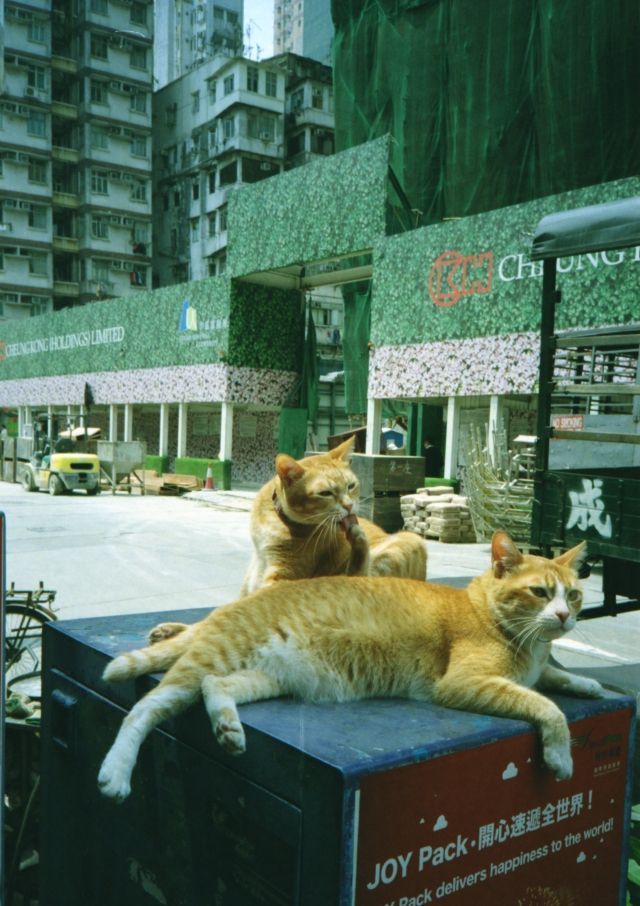
Though sometimes, non-humans are fascinating too.

IMG_20140327_0068 640

So are serendipitous arrangements of objects that “make sense” and cohere.

IMG_20140327_0073 640

I’m making a point to look for “found exhibitions”.

After all, the entire world is an exhibition if you know how to look.


The Artistic Process: On Being in the Zone

Street photography can get addictive.

Sometimes it’s the challenge, because you’re setting yourself up to be unobtrusive.

IMG_20140320_0021 640

My cameras are all very small. My Minolta AF C and Olympus XA 2 look like plastic toys so people don’t take me seriously even when they spot me.

Sometimes you want to be spotted. It adds drama to the scene.

IMG_20140320_0071 640

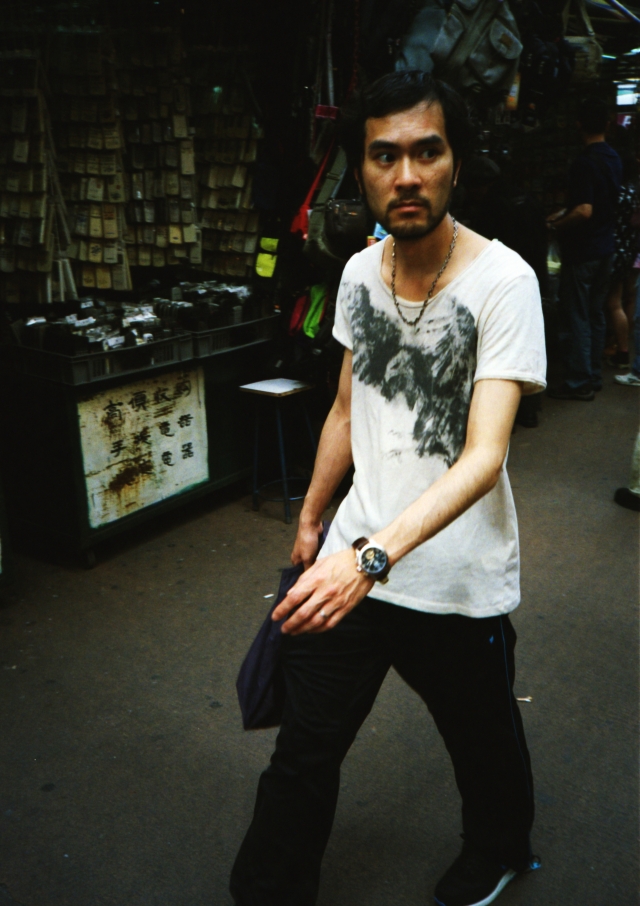
Sometimes you’re right in their faces but they can’t be bothered … this man saw me with my camera pointing at him and went on doing what he was doing…

IMG_20140320_0041 640

I get out and walk and get “in the zone”. It’s a subjective (but common enough) experience.

For me, it happens when I’m writing or reading or when I’m teaching, when I’m fully immersed in the experience without any sense of self-consciousness.

In “Tradition and the Individual Talent”, one of my favourite essays on writing poetry, T. S. Eliot wrote (among other things) on the artistic process:

What happens is a continual surrender of himself as he is at the moment to something which is more valuable. The progress of an artist is a continual self-sacrifice, a continual extinction of personality.

And he goes on to say:

Poetry is not a turning loose of emotion, but an escape from emotion; it is not the expression of personality, but an escape from personality. But, of course, only those who have personality and emotions know what it means to want to escape from these things.

Writing, reading, teaching, and street photography are ways of getting myself outside of myself. It’s a way to silence that inner voice at the back of my head so that I’m not second guessing and talking to myself all the time.

IMG_20140320_0023 640


IMG_20140320_0067 640

Anyone who wants to be good at what he or she does (especially though not necessarily in the field of the arts) ought to read Flow: The Psychology of Optimal Experience and Creativity: Flow and the Psychology of Discovery and Invention by Mihály Csíkszentmihályi.

He uses the word “flow” to describe that happy state of being engaged in endeavours such as artistic creation, athletics, scientific tinkering, and so on, to map out relationships between learning, enjoyment and satisfaction.

It’s rather “pop psychology”-ish, but it’s very enabling in terms of helping me think about art creation in a wholesome way, in a way that is opposite to that image of the tortured artist celebrated by the media. Van Gogh, Diane Arbus and Sylvia Plath – the list goes on.

But surely there’s also room for artists/writers who want to be productive and remain sane… there’s Henri Cartier-Bresson, who deliberately moved away from photography to take up painting later in his life, there’s Wallace Stevens, poet and vice-president of an insurance company, who was productive as a poet all the way till his death in his seventies.

IMG_20140320_0050 640


IMG_20140320_0074 640

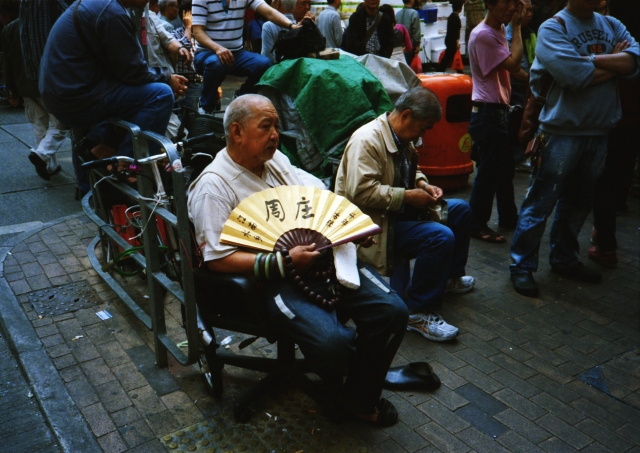
I get out of myself and look at other people and think about what it is that occupies them…

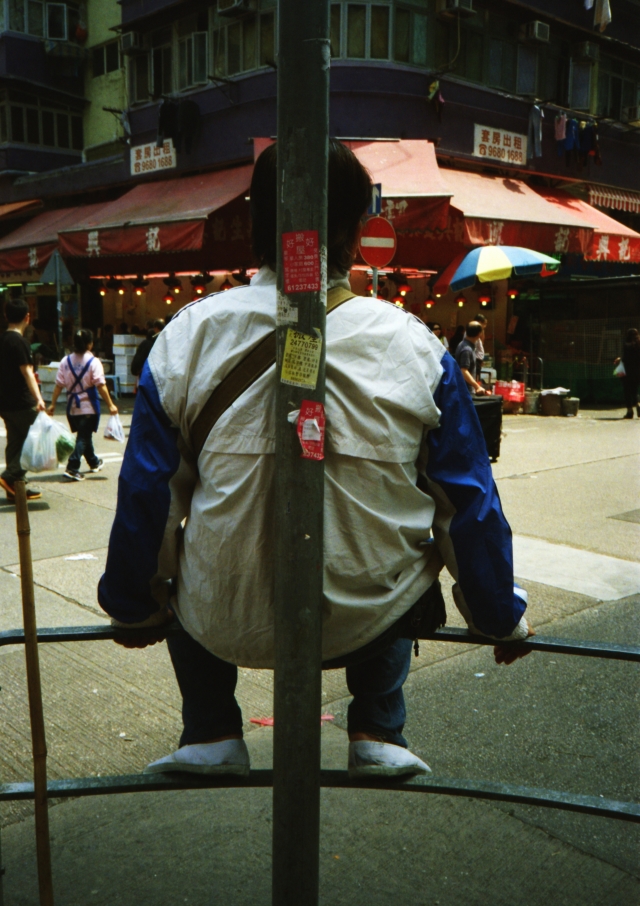
This man, for instance, stood just like this for a really long time, looking at a building across the road.

I took some time to frame the scene properly, and turned around later and saw there were bemused people looking at me looking at him…

IMG_20140320_0125 640

Everywhere we go, we bring along a baggage of impulses, desires, anxieties, ambitions…

IMG_20140320_0092 640

Maybe one day I’ll get caught and someone would tell me to grow up and that this is not a proper use of my time…

IMG_20140320_0091 640

Appetites, Things, Phantasmagoria

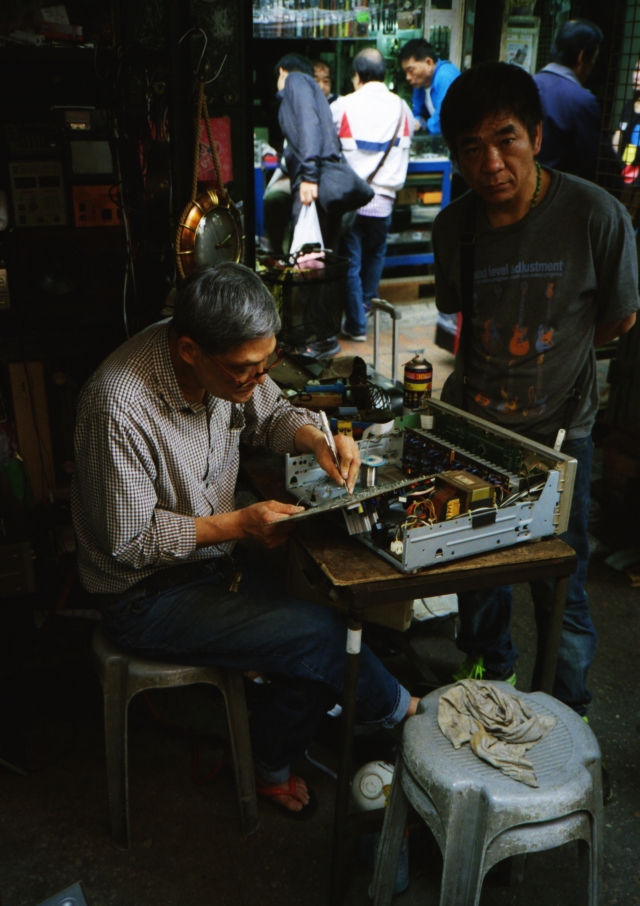
I was just looking through a few images taken on an evening at Fa Yuen Street and on an afternoon in the vicinity of Shamshuipo.

There is that contrast that plays with visibility and lack thereof.

IMG_20140320_0056 640

We see people emerging from darkness.

IMG_20140320_0064 640

We see hands and appetites but not always faces.

IMG_20140320_0066 640

We are reduced to silhouettes of ourselves.

What defines and frames our activities are appetites and things…

IMG_20140320_0029 640

IMG_20140320_0076 640

IMG_20140320_0016 640

Our appetites and things have become substitutes for our selves … that is how a city becomes a kind of phantasmagoria….

How to Analyse and Appreciate Street Photography Without People

I like the following passage by James Elkins:

Every field of vision is clotted with sexuality, desire, convention, anxiety, and boredom, and nothing is available for full, leisurely inspection. Seeing is also inconstant seeing, partial seeing, poor seeing, and not seeing, or to put it as strongly as possible … seeing involves and entails blindness; seeing is also blindness. (Elkins The Object Stares Back 95)

Even though everything is right in front of us, we see that we do not see.

Street photography is about the human condition.

When street photographs are devoid of people, we are reminded powerfully of what we do not see.

It’s the same as telling you not to think of pink elephants –  the moment you hear the command, you can’t help but think of pink elephants.

IMG_20140320_0062 640

The above scene is moulded by desire, and it calls out for a kind of associative thinking that is different from our everyday calculative, economically disciplined thinking.

It’s as if to say every day is a surrender of our selves.

Those in pain will know: there are so many ways to suffer, and in our suffering, many ways to call for help.

IMG_20140320_0078 640

Monochrome photography eliminates colours that may be distracting.

Here, our attention is drawn to multiplicity and repetition.

What the above says to me: there are many shoes for sale. You can buy any pair or more than a pair.

But you could only walk in your own pair.

IMG_20140320_0084 640

We’re asked to think in terms of symbols.

What does the electric meter symbolise?

For me, the photograph is asking the following questions: how much have we accomplished? Is there any one to keep track?

Where is the electricity meter of our days? Where is the electrician?

Is the photograph asking those questions, or am I the one asking?

Perhaps the photograph and I are one.

IMG_20140320_0119 640

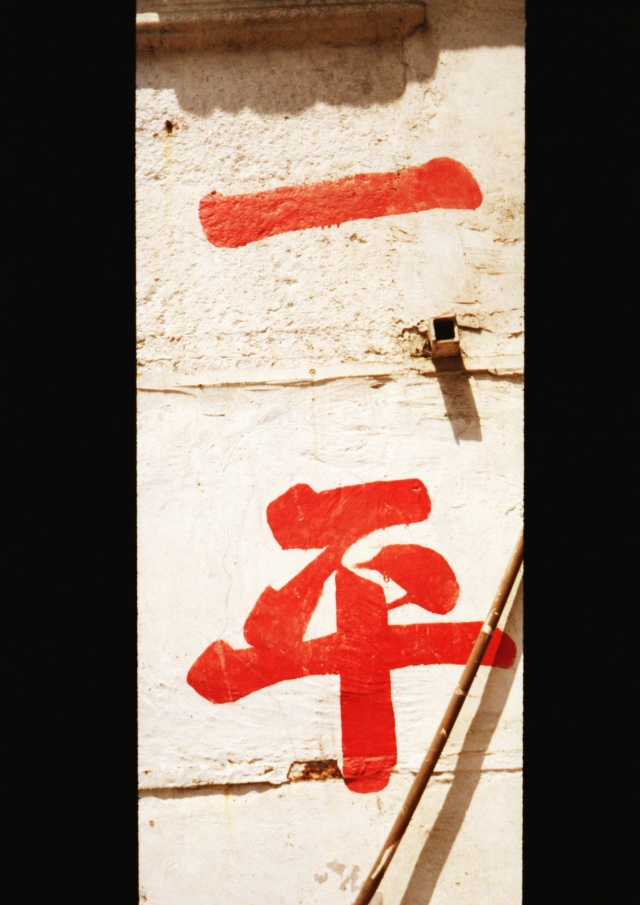
What’s the writing on the wall?

Translation: one, peace.

It’s up to you to fill in the blanks between those words.

IMG_20140320_0120 640

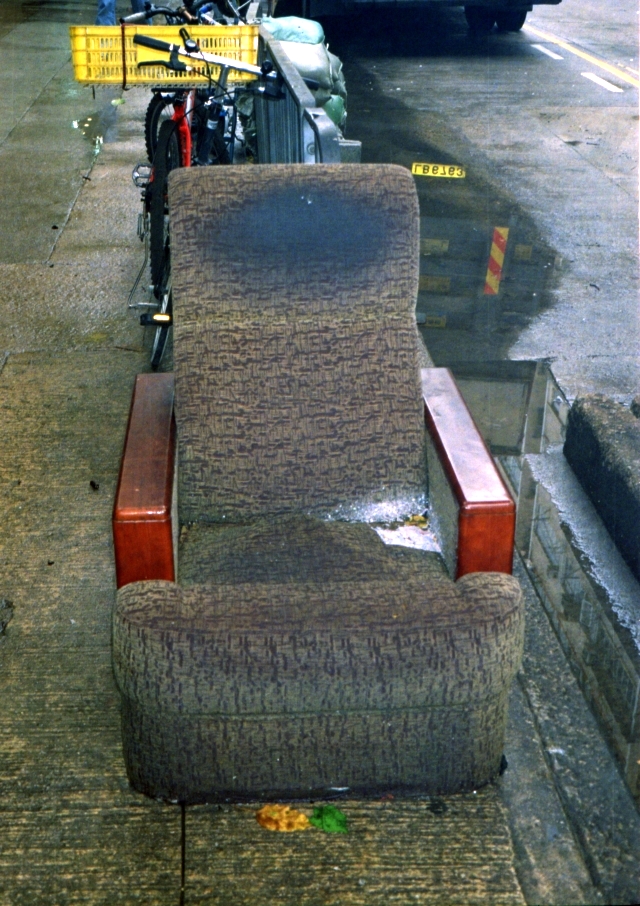
Why would anyone put a sofa on the pavement? I asked this as I took this photograph.

I have been at this spot many times and it’s still here. On some days, it’s occupied.

On others, not.

An empty sofa is like a funeral of the self.

IMG_20140321_0008 640

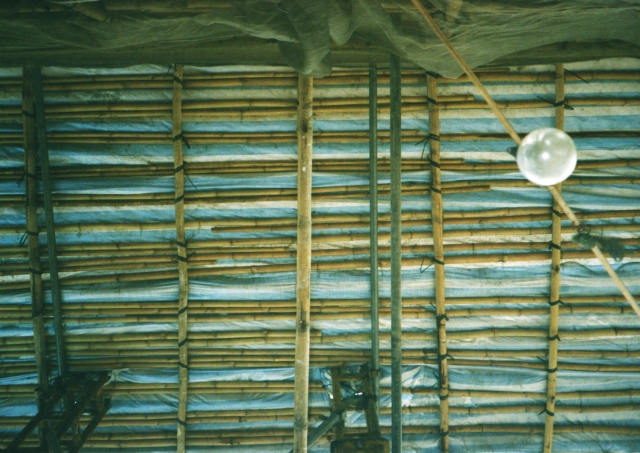
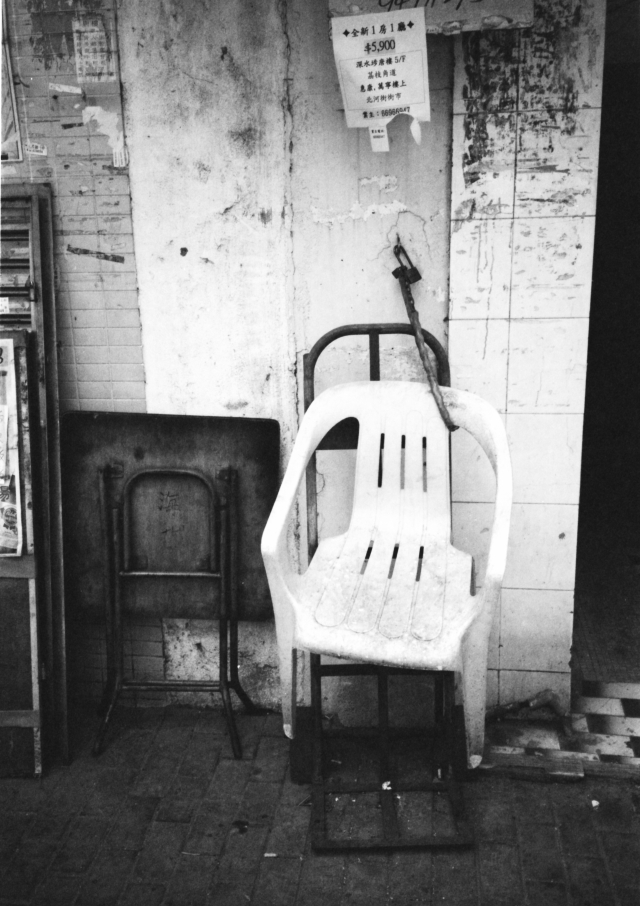
Whoever placed the chairs here is smart.

Things are different with two chairs.

There are possibilities here.

IMG_20140321_0002 640

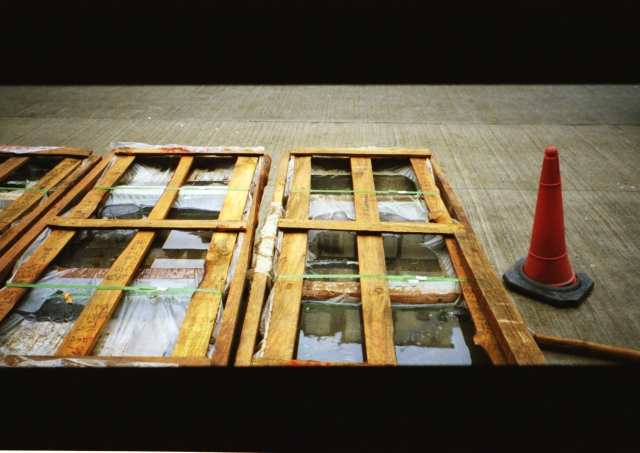
We build and dwell … and soon the evening is here.

IMG_20140321_0003 640

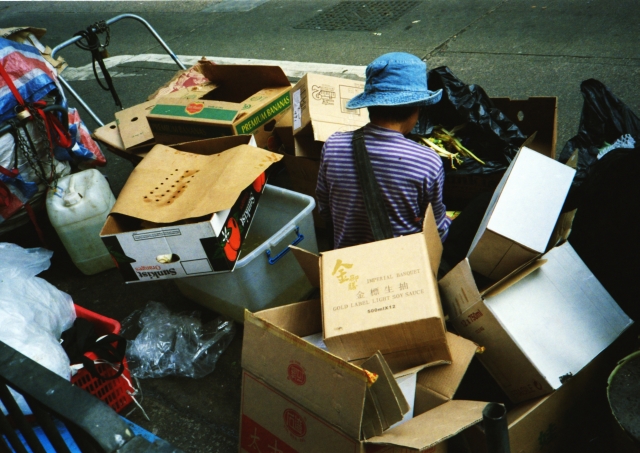
We pack up the boxes of our days…

Will they be enough?

Am I enough?

IMG_20140321_0001 640

Is it already time to move on?

Street Photography: An Imagined Community

Social media and the internet in general are wonderful for those of us who are committed to somewhat specialised endeavours.

I’ve been reading the posts of quite a few people for a while now. Though I’ve never met them in person, I’ve been inspired by their examples and their work. You could sort of tell the kind of people they are by their posts.

Benedict Anderson uses the term “imagined community” to refer to a person’s sense of belonging to a group (he was talking about nationhood) even though he or she may never have met all its members. I know I may be presumptuous here, but I’d like to think these are members of my imagined street photography community.

In an ideal world, I’d really like to have a few rounds of beer with all of them at the same table. It’ll be an absolute blast.

Here are a few sites/people I’m constantly checking out.

IMG_20131126_0002 640

Eric Kim

Eric bares his soul in quite a few of his posts. Here, he wrote about street photography and social media. Here, he wrote about GAS (Gear Acquisition Syndrome), a common affliction for photographers. And my favourite post here is about what drives him and how he’s seeking to follow his passion and at the same time remain realistic about bread and butter issues.

Ming Thein

This guy is a hyper-achiever. Put together an MBA ethos with a photographer’s sensibility and this is who you’ll get. [Edit: Ming Thein says he doesn’t have an MBA (see comments below) but it’s undeniable that he really is very focused, committed and productive.]   He’s not a street photographer per se but I do admire his mastery of photography techniques. In two years, he wrote 780 articles, had 9.5 million visitors, and received 36 000 comments! Check out his post on printing here.

IMG_20130301_0011 edited 640

Shoot Tokyo

Dave is another photographer with an MBA ethos. [Edit: Dave says he doesn’t have an MBA (see comment below) but it’s undeniable that he really is very focused, committed and productive.] I think he’s a high-level business executive or a business owner. He’s a flaneur in Tokyo. And check out his Leicas! Yes, Leicas as in plural! Check out his wonderful prints for sale here.

Thomas Leuthard

He’s offering free street photography ebooks! I like his article here on why street photographers do what we do. His Flickr site is more extensive.

IMG_20130124_0011 edited 640

Yanidel Street Photography

He’s on a street photography and life project that will take him around the world in eighty weeks, from Paris to Switzerland and then to Spain, Portugal, London, Turkey, Mexico, Cuba, and so on (you could see his itinerary here.) This article helped me realise that I tend to favour a certain style of street photography, and is useful in helping me vary my way of doing things once in a while.  This article addresses the central existential question every street photographer must ask of himself or herself: 35mm or 50mm?

Invisible Photographer Asia

This is the go-to place for street and documentary photographers based in Asia. You’ll get lots of street cred if your work has been featured here. (One day, one day I’ll make it.) Kudos to Kevin Lee, the person who started it all.

IMG_20130221_0005 edited 640

Photoethnography.com

Click the “equipment” link and you’ll find tons of information on film cameras. Thanks to this site, I decided on a Yashica GX so as to learn to handle aperture priority, and on a Canonet QL17 G III to handle shutter priority and manual. I’ve been using the previous two cameras for a couple of months before finally buying a Leica M6.  Karen Nakamura is an ethnographer by profession. While the site, as far as I know, is no longer being updated, it is the go-to place to learn about film cameras you could use for visual ethnography, a discipline closely affiliated to street photography.

Japan Camera Hunter

While I’ve never bought anything from Bellamy Hunt before, others have done so. See here (Eric’s video) and here (about the Contax T3 that Dave, the Shoot Tokyo guy, bought from Bellamy ). This guy definitely has street cred. His three articles here, here and here on where to buy film photography gear in Hong Kong is my go-to guide. I basically spent a few happy weekends checking out some of these places. I definitely owe this guy a few beers.

IMG_20130222_0035 edited 640

These are a few sites/people who are exploring the use of social media alongside street photography. In some cases, it’s related to their day jobs. In a few other instances, you could say street photography is part of a portfolio of various other endeavours.

In the age of social media, it’s important to embrace the “no one knows anything” ethos. The phrase was used by William Goldman in relation to Hollywood, to describe how, in the end, there is no such thing as a fixed formula to doing things and even “experts” are constantly surprised by unanticipated surprises in the fields of their own supposed expertise.

I’m beginning to think that in the end, there are no experts, and that it is only committed and thoughtful practitioners who will thrive. The only thing to do is to open ourselves to the possibilities of positive black swans (a phrase coined by Nassim Nicholas Taleb, whose books I return to again and again).

These people inspire me with what they do and I wish them all the best.

IMG_20130124_0002 edited 640

At my end, I’m working on a poetry plus street photography manuscript and am planning to teach a new undergraduate course on photography, writing and social media hopefully in the next academic year. I’m taking baby steps here compared to these people.

P.S. Have I missed anyone? I know the list is definitely not exhaustive and skewed in terms of gender. Would be grateful if anyone could could fill in the gaps.

Susan Sontag vs John Berger

I am presenting a paper on photography and literature at an academic seminar next Monday at Hong Kong Baptist University, and this is part of what I am going to say:

IMG_20130724_0011 640

This is what Susan Sontag says about photography:

like many mass art form, photography is not practiced by most people as an art. It is mainly a social rite, a defense against anxiety, and a tool of power … Photographs document sequences of consumption carried on outside the view of family, friends and neighbors … Travel becomes a strategy for accumulating photographs. (On Photography)

I am thinking of people I know who like to photograph their food before they eat, or of parents who take photographs of their children while they’re playing the piano at home or of their families in front of the Eiffel Tower. There’s nothing wrong with doing these things (I do them myself all the time), but after a while, if we claim to be serious about photography as an art form and yet this is all we do with photography, then it no longer allows us to see anything new. It allows us to see only what we already see, putting us in a state of self-consuming and self-affirming narcissism, saying, “Look at me, look at me”.

IMG_20130813_0014 640

But a lot of what Sontag says are provocations to thought as well:

Photography implies that we know about the world if we accept it as the camera records it. But this is the opposite of understanding, which starts from not accepting the world as it looks. (On Photography)

What if we pursue photography with humility, as a way of looking at things differently? John Berger has made the point that “Every photograph presents us with two messages: a message concerning the event photographed and another concerning the shock of discontinuity” (Another Way of Telling).  He goes on to say that “Between the moment recorded and the present moment of looking, there is an abyss” ((Another Way of Telling).

IMG_20130724_0026 e 640

The abyss is when the street photograph gives us something we find hard to accept. We look, and look again, and we struggle with the meaning of the scene.

IMG_20130724_0025 640

Perhaps, then, this is the moment we enter into the realm of critique…

IMG_20130724_0012 640

Searching for Singapore III

I suppose this theme is like a visual fixation for me.

This post is dedicated to those who know what it feels like to be doing street photography in your own neighbourhood.

In our own ways, we’re all searching for something, using our cameras as visual search engines.

What are we looking for? For another way to look, to turn everything into a work of art…

IMG_20140310_0006 640

I suppose it’s about moments that surprise me.

IMG_20140310_0002 640

That tree now looks like an explosion with the HDB flat facade as backdrop…

IMG_20140310_0022 640

I keep coming back to HDB flats (public housing that 80-85% of Singaporeans live in), because it’s the cookie-cutter, middle-class, ideological environment I grew up in and which is part of who I am.

IMG_20140310_0001 640

For those looking for general info concerning public housing in Singapore, this article from Wikipedia is a good general source. You could purchase these (highly-subsidised) flats through various schemes which are generally pro-marriage, pro-family, pro-heteronormative, etc.

IMG_20140310_0013 640

It’s all very Bauhaus-influenced, with a rational/functional ethos to it.

Chua Beng-Huat, a sociologist at NUS, has a wonderful book called Political Legitimacy and Housing: Singapore’s Stakeholder Society. It looks at the ideological and social-engineering aspect of Singapore’s public housing policy.

I’m fascinated by how newness can emerge from familiar/regimental environments.

I have a thing with hawker centre food …

IMG_20140310_0016 640

These are some people I’m learning to see again with my camera.

IMG_20140310_0015 640

IMG_20140310_0023 640

These were all taken on the same day I was due to go back to Hong Kong.

At the airport … back to Hong Kong…

IMG_20140310_0019 640

Is Hong Kong any different?

IMG_20140310_0031 640

IMG_20140310_0026 640

IMG_20140310_0034 640

In the end, it’s all about finding your place, moving up or down…

I should say all of images here are from the same roll of film: Ilford XP2 in an Olympus XA2.

The Leica M6 is now my back up camera (!!!)

Thanks for reading!