Quiet Rural Hong Kong

Mention Hong Kong and you would think of skyscrapers, crowded streets, and the wonderful dimsum.

But there’s a quieter, meditative side to Hong Kong as well.

IMG_20130523_0041 dpp 640

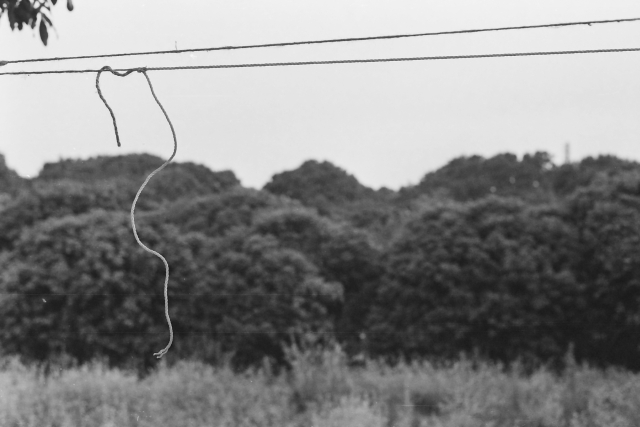
You could find scenes like these…

IMG_20130523_0018 dpp 640

IMG_20130523_0019 dpp 640

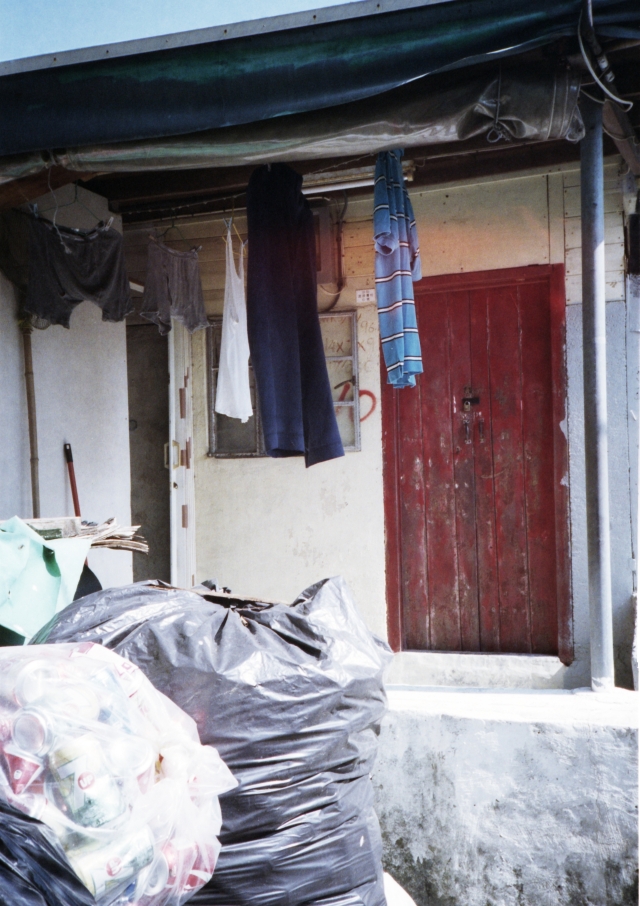
These are the views you get if you’re willing to live in somewhat out-of-the-way village houses.

IMG_20130523_0031 dpp 640

IMG_20130523_0033 dpp 640

These are really quiet, meditative spots.

IMG_20130523_0035 dpp 640

IMG_20130523_0036 dpp 640

If you’re willing to live near a farm…

IMG_20130523_0030 dpp 640

IMG_20130523_0038 dpp 640

And this, too, is an environment where we could live with ourselves…

IMG_20130523_0026 dpp 640

Thanks for reading!

Slow Day

The usual media depiction of Hong Kong revolves around skyscrapers, the Peak, and the excellent dim sum, of course.

But there is also another pace of life which you can see on weekends.

All photographs are taken at Ma On Shan, New Territories.

IMG_20140120_0001 640

You’ll see people cycling, fishing and taking leisurely walks.

There are fast-paced days and there are slow-paced days.

Today, we’ll go slow.

IMG_20140117_0003 640
IMG_20140117_0004 640
The cycling route can be rather scenic.

IMG_20140116_0025 640
IMG_20140116_0034 640
There’s an often-mentioned creative writing strategy: when writing a poem about love, never use the word “love”.

This entry is about cycling with my son, without photographs of us cycling.

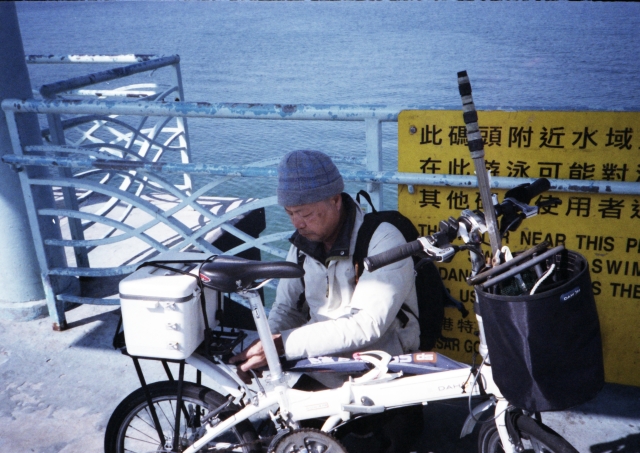
You can see our bikes in the background though.

IMG_20140116_0024 640

At moments like this, we slip into another time. You’ll see people enjoying being alone, in their own space-time bubbles.

IMG_20140116_0043 640
IMG_20140116_0046 640

This is the bike shop we go to when there’s something to the bikes I can’t fix. They’re really friendly and will actually tell me I don’t need that pair of fancy bike gloves when a generic one would do as well.

IMG_20140116_0027 640

My cynical self would think about the way they are setting up their profit margins. But they sometimes do minor repairs and maintenance for free as well.

The boss will just tell you it’s free of charge and please buy your next bicycle from him.

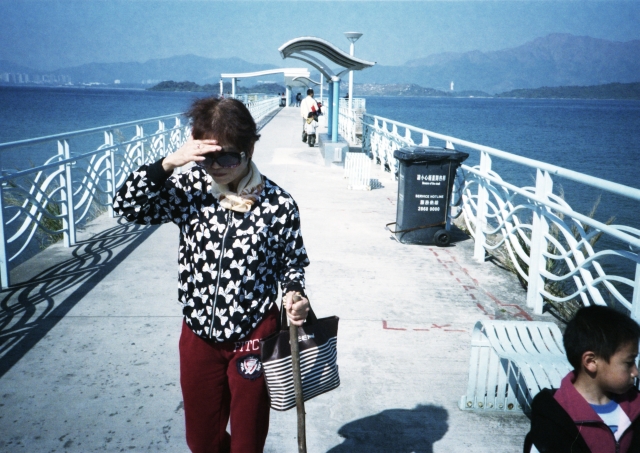
She was shielding her eyes from the sun, so naturally I brought my camera to my eye.

IMG_20140116_0050 640

That’s at the end of Wu Kai Sha beach. You’ll see quite a number of village houses.

IMG_20140116_0049 640
IMG_20140116_0031 640

IMG_20140116_0040 640

An open door.

IMG_20140116_0048 640

You could see the contrast between village life and high rise living here.

Hong Kong is a city of sharp juxtapositions.

IMG_20140116_0029 640

Thanks for reading!

The Art of Life

I’m planning to use the following quote for a talk on poetry and photography for fellow writers.

It’s from Zygmunt Bauman, a sociologist who has written on what he calls “liquid modernity”. This passage from his book The Art of Life is relevant to those who are on the quest for meaning:

To practise the art of life, to make one’s life a “work of art”, amounts … to being in a state of permanent transformation, to perpetually self-redefine through becoming … someone other than one has been thus far. (The Art of Life 73)

I now have the habit of bringing along one or two film cameras wherever I go. It’s usually a Leica M6, paired with either a Yashica GX, Canonet QL 17 Giii or more recently, the Olympus XA2.

The Olympus XA2 is really stealthy because of zone-focusing. And it’s really quiet too. For example, I could do this in a cab without the driver noticing:

IMG_20131024_0005 A3 A4 640

Try that with a Canon 5D Mark III.

Part of my fascination with film cameras has to do with their longevity – digital cameras either go out of fashion or break down after 3-5 years (though it has to be said that my Canon G11 is still going strong). The Olympus XA2 was made in the 1980s, which means the thing in my hand is about 30 years old.

I guess I am now using my cameras as a sketchbook of sorts, storing material for writing and thinking. This is probably a little too deliberate, but I think of this as pushing myself beyond what I am, “becoming someone other than one has been thus far”, asking street photography to teach me to be a better writer and thinker.

For now, the art of life for me is about storing moments which might otherwise seem artless.

Lately, I have begun to take pictures with only my eyes, imagining what a scene would look like on a photograph… click… click…

And I like this quote from William Todd Schultz, who wrote An Emergency in Slow Motion: The Inner Life of Diane Arbus, a wonderful psychobiography of Arbus:

Artists aren’t always in complete command of their material. Sometimes it commands them and they let it; they get out of the way, the subject matter comes unbidden, it compels them and they follow its lead.

This might be a careless comparison, but Arbus is to photography what Sylvia Plath is to poetry.

And as for material for the street photographer, there’s often poetry to be found in places you least expect, which is why that tiny Olympus XA2 is so handy:

IMG_20131024_0024 A3 A4 640

The above is just next to where I live, a plot of land on which a small shopping mall is being built. *sigh*

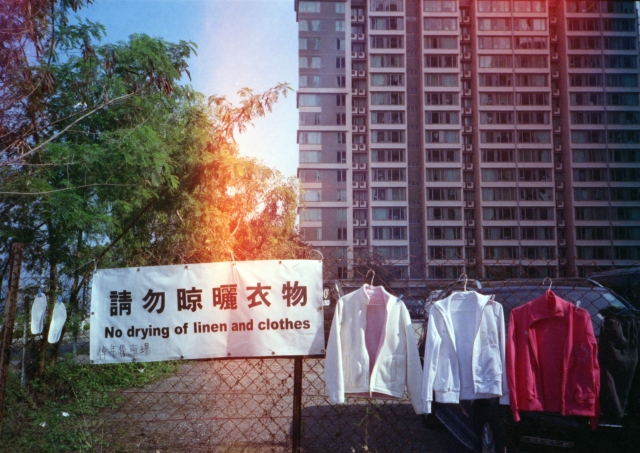
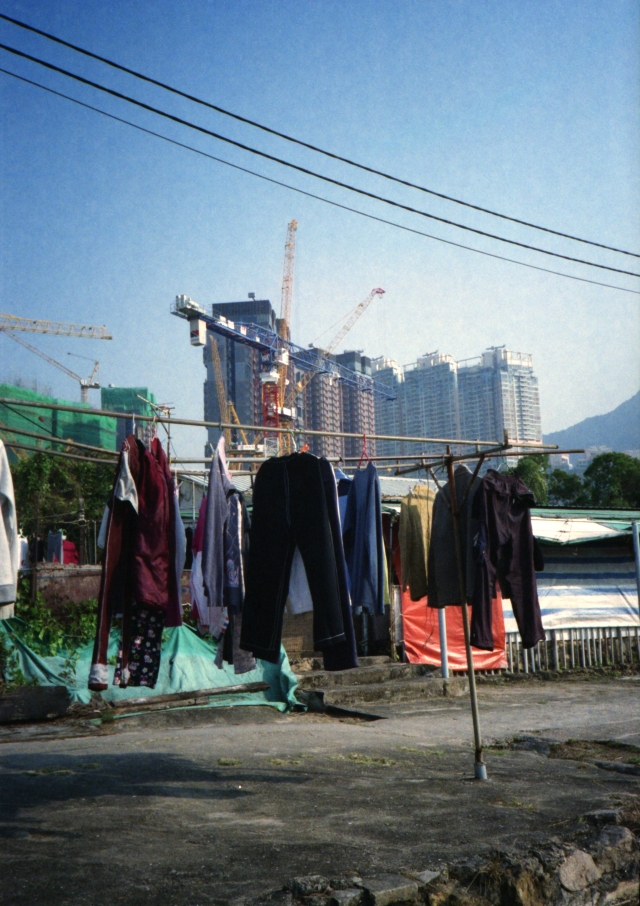
I’m always fascinated by how one could be in a built-up area in Hong Kong, and after walking for 20 minutes, be in the midst of idyllic village houses where clothes are hung in open air and kitchens are next to public walkways:

IMG_20131024_0042 A3 A4 640

IMG_20131024_0043 A3 A4 640

And then, 10 minutes later, one is at the beach.

IMG_20131024_0065 A3 A4 640

IMG_20131024_0066 A3 A4 640

And you would come across scenes like this:

IMG_20131024_0067 A3 A4 640

This is Wu Kai Sha beach, and there’re now plans for land reclamation in the area which would mean the beach would be no more… *another sigh*

Thanks for reading.

Monochrome Poetry

Photography is … visual. That much is obvious. As a published poet and literature professor, I’m supposed to be able to convey ideas with words but what happens when something is a visual idea?

This would take us from visual to verbal to visual again. And the first and last visual may not be the same, even though we’re talking about the same photograph.

I look and look and understand how a photograph works, but I’ve yet to properly learn how to say why it works and why I enjoy it.

Photography has made me rethink some of those things to do with literature that I’ve forgotten. Of course, the experience of a literary work is not the same thing as a book review or a scholarly paper.

The experience … the experience … the horror … the horror … the “oomph” … it starts with the experience, and sometimes I feel like all one has to do is to read and look and be quiet. That was the experience of reading in my youth which put me on the path of academia.

The subjective “oomph” comes first. All the bits about literary/intellectual history, the meaning of meaning and so on, comes after.

This explains why my colleagues down the corridor could spend so much time on books that I genuinely find boring and pointless … and of course, vice versa.

Anyway, back to what is visual “oomph”, at least for me:

IMG_20131008_0019 A3 A4 640

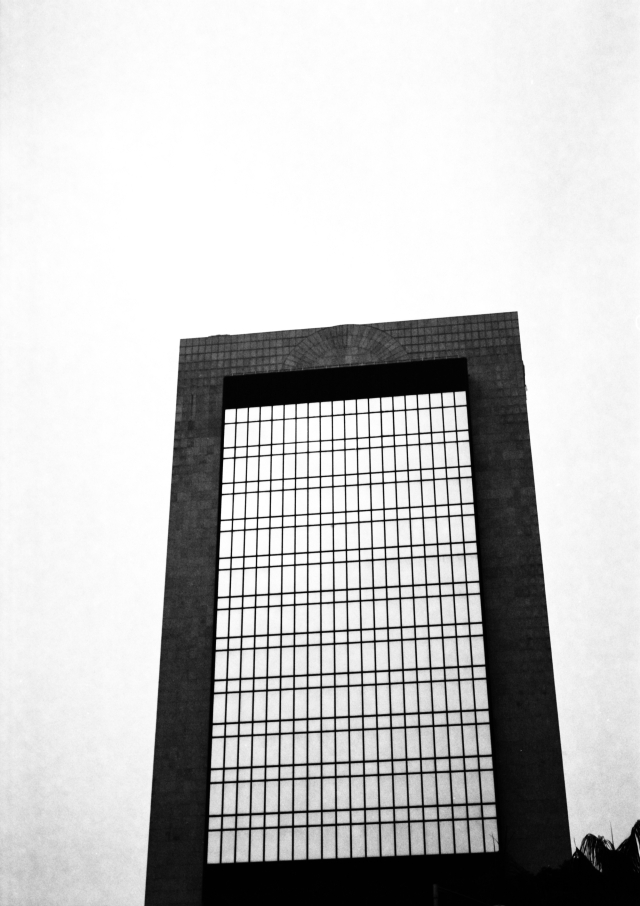
That’s the Leisure and Cultural Services Headquarters at Shatin. Perhaps this is what the Ministry of Truth looks like in Orwell’s 1984.

IMG_20131008_0008 A3 A4 640

The mini-bus and high-rise apartment buildings. So very Hong Kong. This is at the elevated bus interchange just outside New Town Plaza, the hard-to-miss shopping mecca at Shatin.

IMG_20131008_0020 A3 A4 640

Walk down the sloped pavement by the side onto ground level and you’ll see an entire length of village houses, some of which have been converted into eateries.

IMG_20131008_0023 A3 A4 640

That’s just below the bus interchange, right next to more mini-bus terminal stops. I like the different greys of the pavement…

IMG_20131008_0021 A3 A4 640

Yet another village house … with a gothic feel.

All these images are taken from within 200-300 metres. That’s how packed Hong Kong is. Keep in mind this is the urbanised area of the New Territories, third in line in terms of urban development, coming after the Kowloon/Tsim Sha Tsui areas and the Central/Wanchai areas on Hong Kong Island.

Thanks for reading.
Fa Yuen Street Market

Night photography poses a challenge for any photographer.

Even with a digital camera, you’ll need a wide aperture, longer exposures, perhaps a tripod, or image stabilization if you’re doing it handheld, and you’ll need to have a high ISO setting.

Auto-focus might be a problem if it gets too dark, as a digital camera may not be able to find a focal point quickly enough.

So if you’re a street photographer with a film rangefinder loaded with Ilford XP2 at ISO 400, the odds are somewhat stacked against you at night. This is one of those times when you wish you’d caved in and bought that Fuji X100s.

A street market at night, as it happens, is one of those wonderful scenarios where everything comes together.

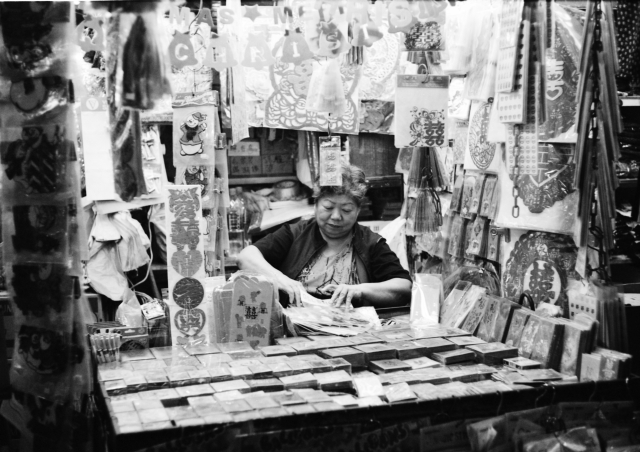
As the light bulbs are bright, you’ll have natural vignetting. The goods might have been arranged to form a perfect frame within a frame.

IMG_20130918_0010 A4 640

IMG_20130918_0013 A4 640

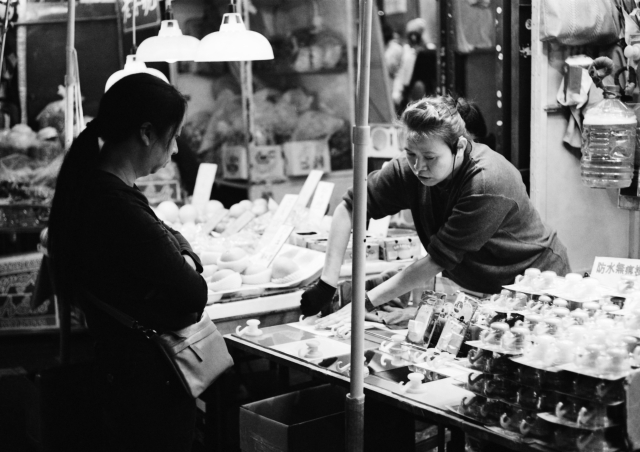
The stall hawkers, even when they spot you, would be too preoccupied with selling their wares to their customers, while the customers’ attention would be on those wares.

IMG_20130918_0012 A4 640

IMG_20130918_0011 A4 640

IMG_20130918_0005 A4 640

This person did spot me…

IMG_20130918_0003 A4 640

Oh well … and to challenge myself, this:

IMG_20130918_0015 A4 640

Thanks for reading.
Grids, lines and colours

I’m now convinced that Hong Kong is a street photographer’s paradise.

I’ve been paying attention to grids, lines and colours and it seems to me that all I have to do is wait a little bit and the composition would fall into place after a while.

Mongkok is rather good for that sort of thing.

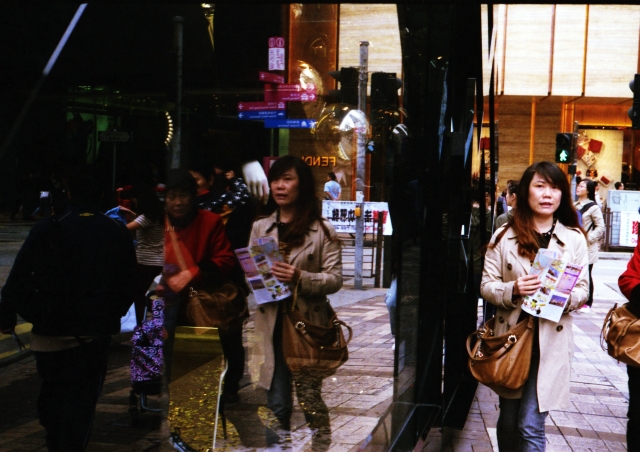
For example, the rectangular green grids of this candy store window has a lomography edge to it, and all I had to do was to memorise where the framelines of my beloved Leica M6 would be and wait until someone walks into the frame. Check out the reflections and the Chinese characters – they’re there and yet not so overwhelming:

IMG_20130906_0003 A3 adjusted A4 640

The diagonal lines were calling out to me as I was on a bridge:

IMG_20130906_0002 A3 adjusted A4 640

And finally, I like the grungy and yet contemplative mood this evokes:

IMG_20130906_0002 640

And I’m keeping a close watch on my diminishing supply of Kodak Portra 400 film with which these were taken…

Thanks for coming by today.

Ode to Retail

I don’t usually do color photography as I find it hard to “coordinate” the colors alongside the action in the frame. But the environment in this case seems to call out for it.

This was the beginning of a trip to Festival Walk, a shopping mall. My son wanted to pick up a few books at Page One. We sat at the front of a mini-bus.

IMG_20130827_0009 640 by 480

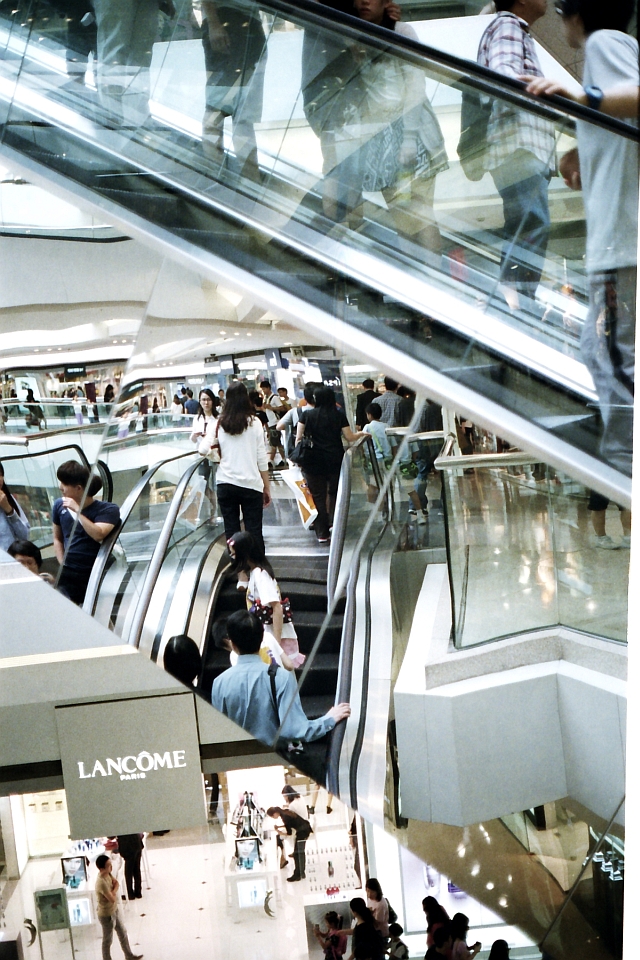
For those not familiar with Hong Kong: Festival Walk is a gigantic shopping mall with a skating rink and cinema. I often got lost the first few times I was here.

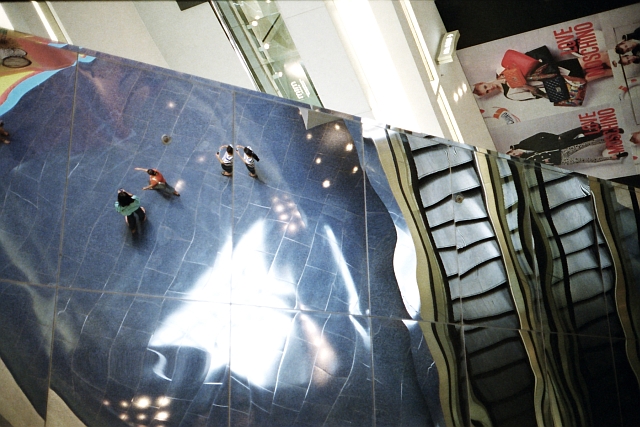
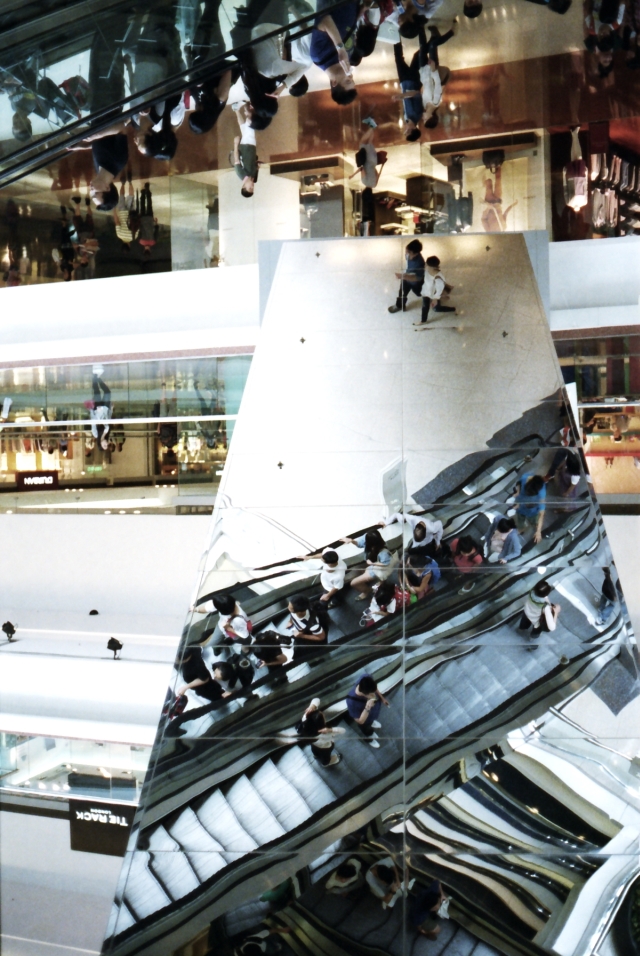
There are so many escalators and reflective surfaces. There is a fun house mirror effect every time we are on the escalators:

IMG_20130827_0025 640 by 480

We forget which way is up and which way is down…

IMG_20130827_0032 640 by 480

I think this is the point, that the design of malls are slightly disorienting so that the shopping experience feels slightly unreal. Our ability at making rational choices are somewhat incapacitated – we lose track of time and spend more than we had originally intended.

IMG_20130827_0034 640 by 480

I am reminded of a hotel called “Lotus Casino” in The Titan’s Curse, a novel in the Percy Jackson series, in which the characters were trapped. They were reluctant to leave the hotel because it was so fun. (The environment of casinos, of course, are meant to be unreal so that the chips [money] you’re losing look inconsequential anyway because you are just playing a game of Monopoly.) I’m thinking of those casinos in Macau now, especially the Greek Mythology Casino, complete with a gigantic statue of Zeus…

Here, the literary scholar in me is reminded of Fredric Jameson’s discussion of the Westin Bonaventure Hotel, about how the postmodern architecture is tied in with the (totalitarian?) logic of late capitalism.

It’s so easy in the mall. We look and point and buy:

IMG_20130827_0035 640 by 480

Everything is on show and so very photogenic, and the unreal becomes part of the experienced reality we consume and hence take for real:

IMG_20130827_0028 640 by 480

I almost forgot to leave.

Looking Out a Bus Window

IMG_20130729_0037 800 by 600

This is one of those grungy images that jumped out at me. I was on a double-decker bus and he was on an adjacent seat, looking out. I like the urbane, dreamy and defiant attitude. Definitely a Wong Kar-wai Chungking Express moment for me. In fact, the bus went past Chungking Mansions moments before I pulled out my camera.

That Nikon signage was a serendipitous element so crucial to street photography.