Ngong Ping Cable Car IV

If you’ve read the previous 3 posts, you’ll know that the photographs below were in some of those posts, though they are in color here.

Yes, my B mode (berserk mode) in the cable car.
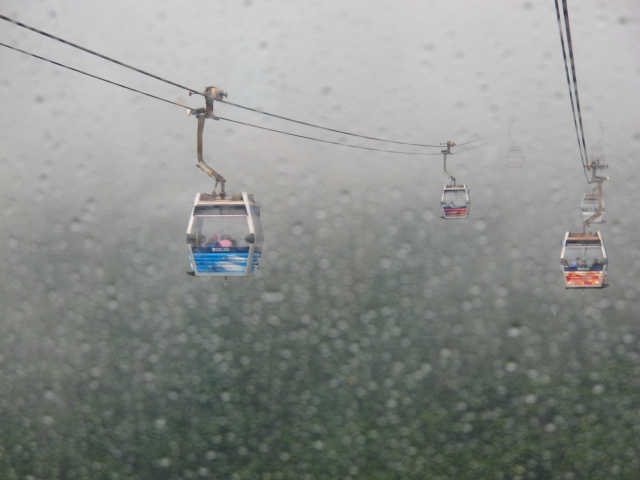
IMG_7017 640

IMG_7019 640

IMG_7055 640

Monochrome is a gift to the street photographer, because:

i) it removes distracting elements and focuses our attention on the theme and/or graphic elements such as lines/grids/repetitions;

ii) it provokes a knee-jerk reaction to do with aesthetic pretensions (ooh b/w, therefore it must be seriously worthy/arty/historical/documentary);

iii) there’s virtue in taking the minimalist less-is-more approach.

But sometimes, less can be less as well.

Slightly contrasty colors can be striking.

Here’re the cable car exhibits (which my wife said looked like Ultraman heads).

IMG_7116 640

IMG_7119 640

While we’re on the subject of superheroes, it’s hard to resist that Superman blue and red combo.

IMG_7130 640

Blue and red combo again.

IMG_7131 640

Slightly desaturated colors can be … poetic.

Colors could mark our different kinds of spaces.

Colorful below, black and white above.

There’s a statement here to be made about human colors vs religious monochrome.

IMG_7154 640

The colors below look Kodak Ultramax -ish to me.

IMG_7260 640

IMG_7261 640

Anyway, there’s a tussle here of course, and you could say the photograph in color is not the same as the one in monochrome.

IMG_7179 640

This one below looks Kodak Portra – ish. (Yes, yes, I miss my film cameras already.)

IMG_7258 640

Of course, there are various kinds of monochrome (low vs high contrast, different filters, etc.).

Not to mention b/w vs colors as in film photography.

Photography is a universe in itself.

IMG_7338 640

Until next time.


Noah’s Ark in Hong Kong (Monochrome Version)

We’re still at Noah’s Ark.

IMG_6946 640

Though this time, in contrast to my previous post, I figure I’ll go the monochrome high contrast way just to see the difference.
Did I mention there was a beach next to Noah’s Ark?

IMG_6743 640 1

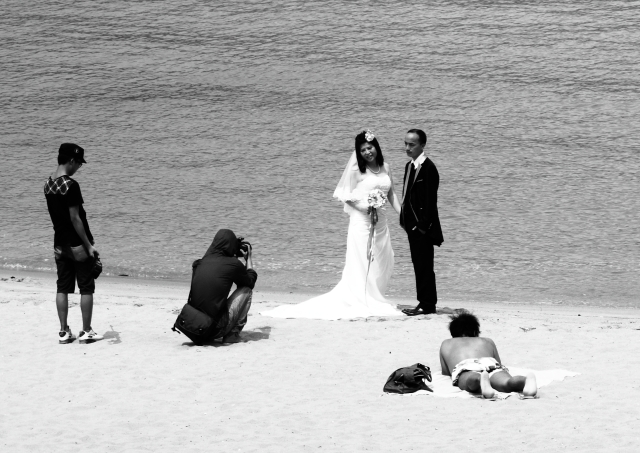
So we have a couple posing for wedding photographs, quite oblivious to the sun-bather who is enjoying the view.

IMG_6881 640

The humor is gone from the photograph… instead it’s a kind of existential commentary on human aspiration…

IMG_6888 640

A reflection on the ups and downs of everyday life…

IMG_6862 640

For some reason the same photograph in high contrast monochrome looks grittier …

IMG_6855 640

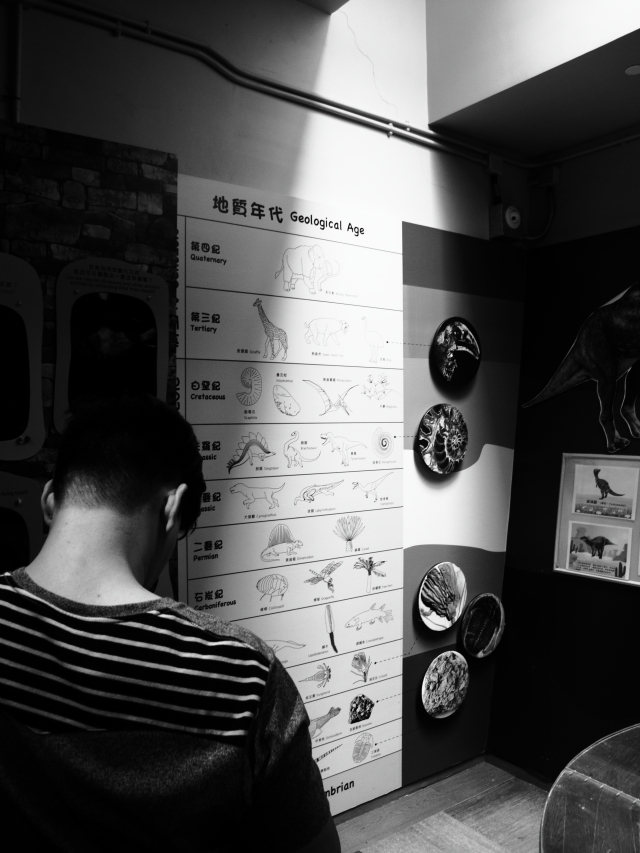
There’s plenty to keep the kids busy. Educational too.

IMG_6841 640

The Last Supper.

IMG_6838 640

The Last Supper, with the kids in front and gallery guide behind.

IMG_6898 640

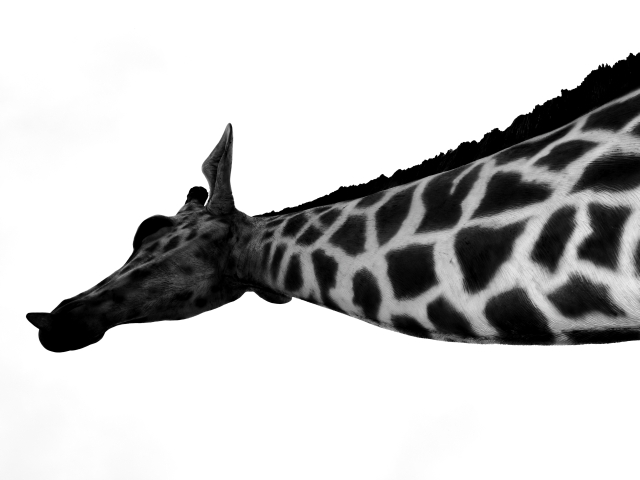
The giraffe looks overextended.

IMG_6949 640

Park attendants sorting things out.

IMG_6957 640

From behind a popcorn and bbq stand.

IMG_6793 640

The village house is still beautiful.

IMG_6959 640

Time to relax.

Thanks for reading!


Appetites, Things, Phantasmagoria

I was just looking through a few images taken on an evening at Fa Yuen Street and on an afternoon in the vicinity of Shamshuipo.

There is that contrast that plays with visibility and lack thereof.

IMG_20140320_0056 640

We see people emerging from darkness.

IMG_20140320_0064 640

We see hands and appetites but not always faces.

IMG_20140320_0066 640

We are reduced to silhouettes of ourselves.

What defines and frames our activities are appetites and things…

IMG_20140320_0029 640

IMG_20140320_0076 640

IMG_20140320_0016 640

Our appetites and things have become substitutes for our selves … that is how a city becomes a kind of phantasmagoria….

How to Analyse and Appreciate Street Photography Without People

I like the following passage by James Elkins:

Every field of vision is clotted with sexuality, desire, convention, anxiety, and boredom, and nothing is available for full, leisurely inspection. Seeing is also inconstant seeing, partial seeing, poor seeing, and not seeing, or to put it as strongly as possible … seeing involves and entails blindness; seeing is also blindness. (Elkins The Object Stares Back 95)

Even though everything is right in front of us, we see that we do not see.

Street photography is about the human condition.

When street photographs are devoid of people, we are reminded powerfully of what we do not see.

It’s the same as telling you not to think of pink elephants –  the moment you hear the command, you can’t help but think of pink elephants.

IMG_20140320_0062 640

The above scene is moulded by desire, and it calls out for a kind of associative thinking that is different from our everyday calculative, economically disciplined thinking.

It’s as if to say every day is a surrender of our selves.

Those in pain will know: there are so many ways to suffer, and in our suffering, many ways to call for help.

IMG_20140320_0078 640

Monochrome photography eliminates colours that may be distracting.

Here, our attention is drawn to multiplicity and repetition.

What the above says to me: there are many shoes for sale. You can buy any pair or more than a pair.

But you could only walk in your own pair.

IMG_20140320_0084 640

We’re asked to think in terms of symbols.

What does the electric meter symbolise?

For me, the photograph is asking the following questions: how much have we accomplished? Is there any one to keep track?

Where is the electricity meter of our days? Where is the electrician?

Is the photograph asking those questions, or am I the one asking?

Perhaps the photograph and I are one.

IMG_20140320_0119 640

What’s the writing on the wall?

Translation: one, peace.

It’s up to you to fill in the blanks between those words.

IMG_20140320_0120 640

Why would anyone put a sofa on the pavement? I asked this as I took this photograph.

I have been at this spot many times and it’s still here. On some days, it’s occupied.

On others, not.

An empty sofa is like a funeral of the self.

IMG_20140321_0008 640

Whoever placed the chairs here is smart.

Things are different with two chairs.

There are possibilities here.

IMG_20140321_0002 640

We build and dwell … and soon the evening is here.

IMG_20140321_0003 640

We pack up the boxes of our days…

Will they be enough?

Am I enough?

IMG_20140321_0001 640

Is it already time to move on?

Singapore Zoo

Yet another set of street photographs taken at in-between moments during a family outing at the Singapore Zoo a few months ago.

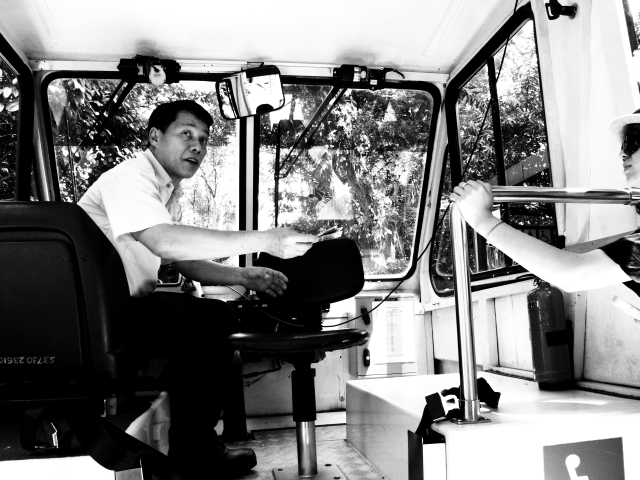
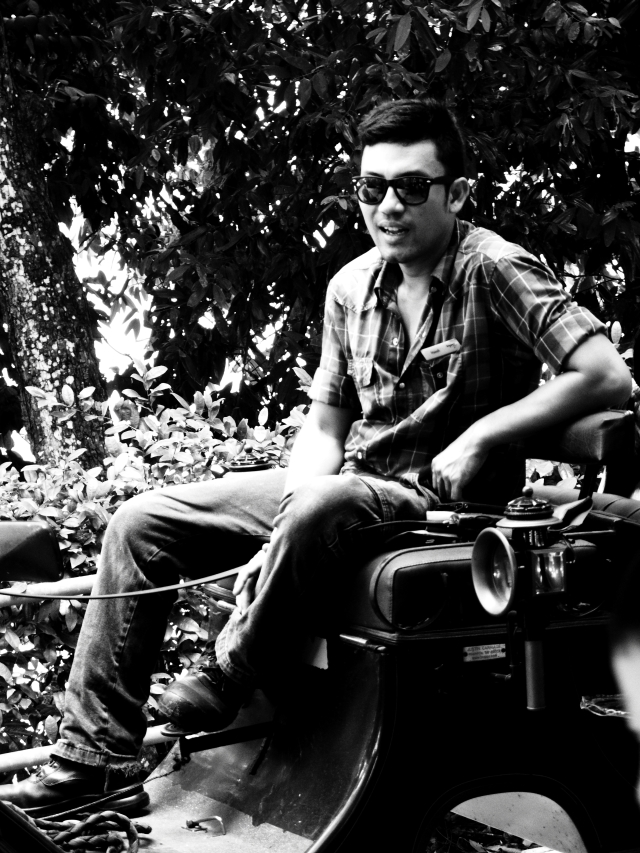
That’s our friendly and helpful tram driver.

IMG_5785 640

My son loves the pony ride.

I am a very talented photographer – through telepathy, I’ve managed to convince the person in the background to bend a little bit so as to be confluent to the pony handler’s face and shoulder outline.

IMG_5833 640

Here’s the horse carriage driver.

IMG_5858 640

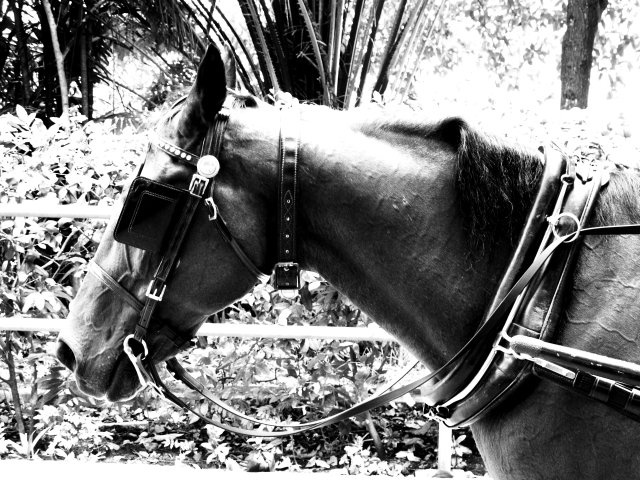
Here’s the horse.

IMG_5862 640

It’s interesting how high contrast monochrome changes things. The photographs look somewhat hard-edged and menacing at times …

Go to the zoo if you’re ever in Singapore. It’s really not so menacing …

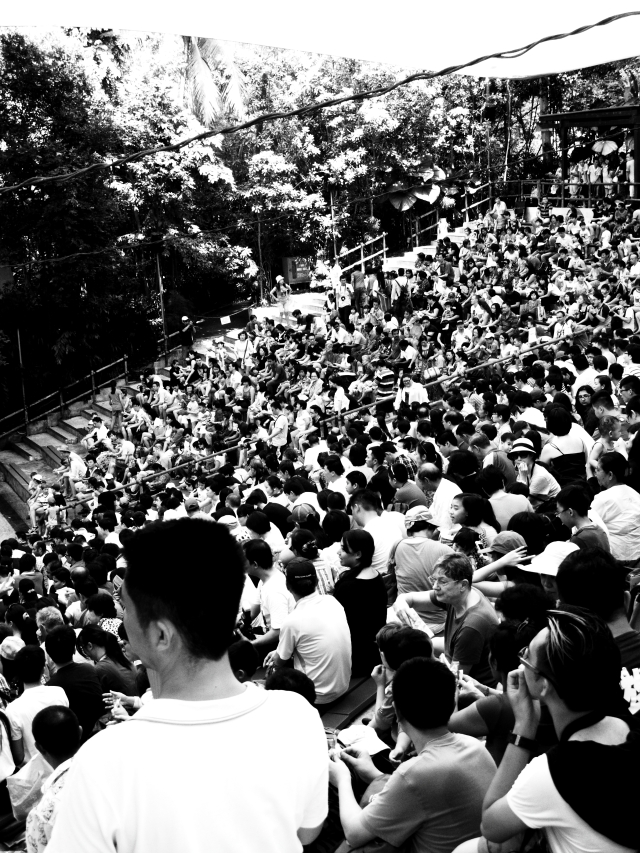
The crowd at an animal performance show.

We go to the zoo every time we’re back in Singapore.

So, I’ve seen the performance many times.

Now, instead of looking at the performance, I look at the crowd and think about how to photograph the human exhibits.

I am a very talented photographer – using telepathy, I’ve managed to convince a stranger to stand up so as to create a contrasting element to the crowd.

IMG_5800 640

That’s err… a bird animal creature with two legs and feathers…

IMG_5797 640

I suppose that’s my nod to Gary Winogrand‘s The Animals.

Thanks for reading!

Ode to Public Laundry

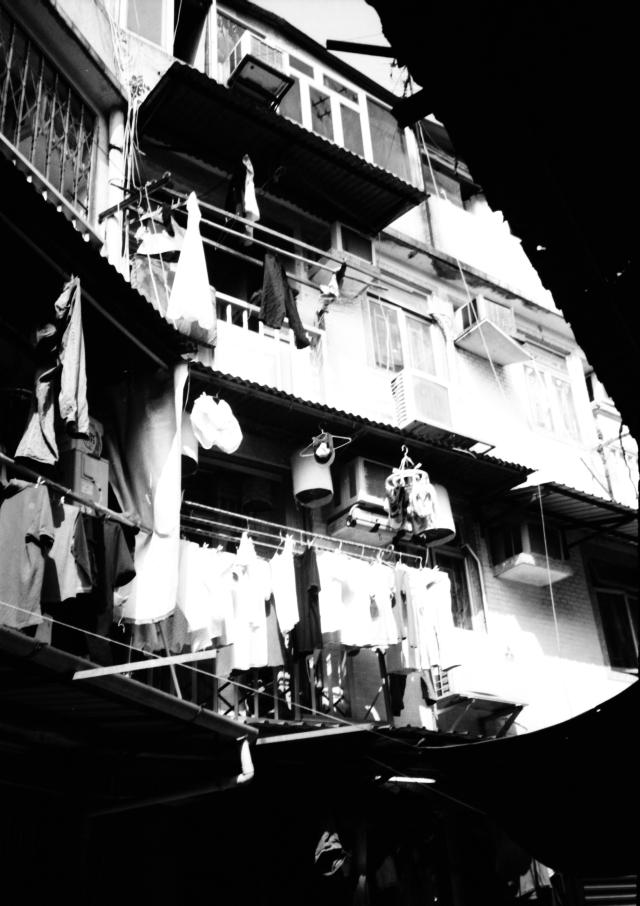
I guess this is a common sight in quite a few places in Hong Kong:

IMG_20131010_0038 A3 A4 640

On the one hand, there are those who say this is unsightly, and that there should be awareness campaigns against airing/drying one’s laundry in public.

After all, it looks too much like a ghetto, and is offensive to middle-class tastes.

(It might bring down property prices.)

IMG_20131010_0043 A3 A4 640

On the other hand, it speaks of the “can do” spirit of people, who make do with tiny living spaces in Hong Kong.

There is a kind of symphony here of public laundry.

IMG_20131010_0039 A3 A4 640

There is a kind of charm in the way the clothes are being hung… perhaps there is a sense of community here in the way the space is being shared.

Not everyone has dryers at home… and after all, clothes dried in the sun has the smell of sunshine in them.

IMG_20131010_0062 A3 A4 640

And sometimes, it can get a little creative:

IMG_20131008_0044 A3 A4 640

There are public spaces. There are private spaces.

And perhaps there are in-between shared social spaces with streets that are peopled even if there are no people around…

Monochrome Poetry

Photography is … visual. That much is obvious. As a published poet and literature professor, I’m supposed to be able to convey ideas with words but what happens when something is a visual idea?

This would take us from visual to verbal to visual again. And the first and last visual may not be the same, even though we’re talking about the same photograph.

I look and look and understand how a photograph works, but I’ve yet to properly learn how to say why it works and why I enjoy it.

Photography has made me rethink some of those things to do with literature that I’ve forgotten. Of course, the experience of a literary work is not the same thing as a book review or a scholarly paper.

The experience … the experience … the horror … the horror … the “oomph” … it starts with the experience, and sometimes I feel like all one has to do is to read and look and be quiet. That was the experience of reading in my youth which put me on the path of academia.

The subjective “oomph” comes first. All the bits about literary/intellectual history, the meaning of meaning and so on, comes after.

This explains why my colleagues down the corridor could spend so much time on books that I genuinely find boring and pointless … and of course, vice versa.

Anyway, back to what is visual “oomph”, at least for me:

IMG_20131008_0019 A3 A4 640

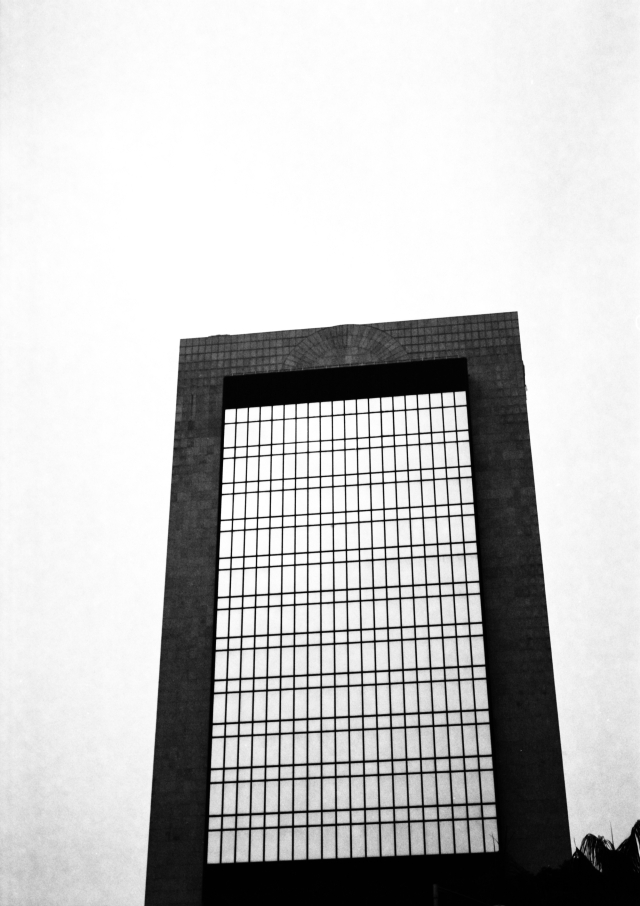
That’s the Leisure and Cultural Services Headquarters at Shatin. Perhaps this is what the Ministry of Truth looks like in Orwell’s 1984.

IMG_20131008_0008 A3 A4 640

The mini-bus and high-rise apartment buildings. So very Hong Kong. This is at the elevated bus interchange just outside New Town Plaza, the hard-to-miss shopping mecca at Shatin.

IMG_20131008_0020 A3 A4 640

Walk down the sloped pavement by the side onto ground level and you’ll see an entire length of village houses, some of which have been converted into eateries.

IMG_20131008_0023 A3 A4 640

That’s just below the bus interchange, right next to more mini-bus terminal stops. I like the different greys of the pavement…

IMG_20131008_0021 A3 A4 640

Yet another village house … with a gothic feel.

All these images are taken from within 200-300 metres. That’s how packed Hong Kong is. Keep in mind this is the urbanised area of the New Territories, third in line in terms of urban development, coming after the Kowloon/Tsim Sha Tsui areas and the Central/Wanchai areas on Hong Kong Island.

Thanks for reading.