Slow Day

The usual media depiction of Hong Kong revolves around skyscrapers, the Peak, and the excellent dim sum, of course.

But there is also another pace of life which you can see on weekends.

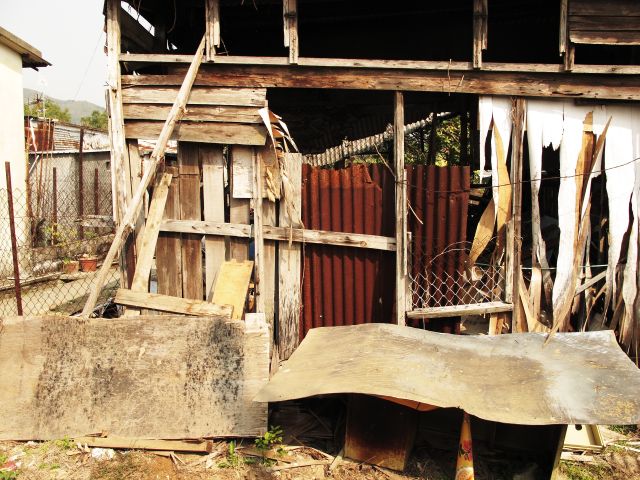
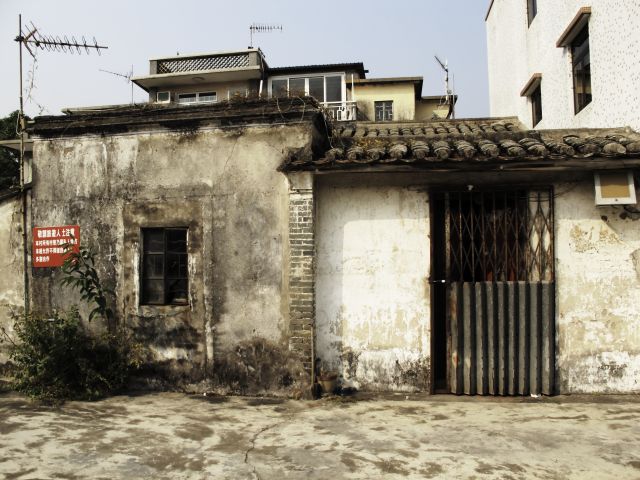
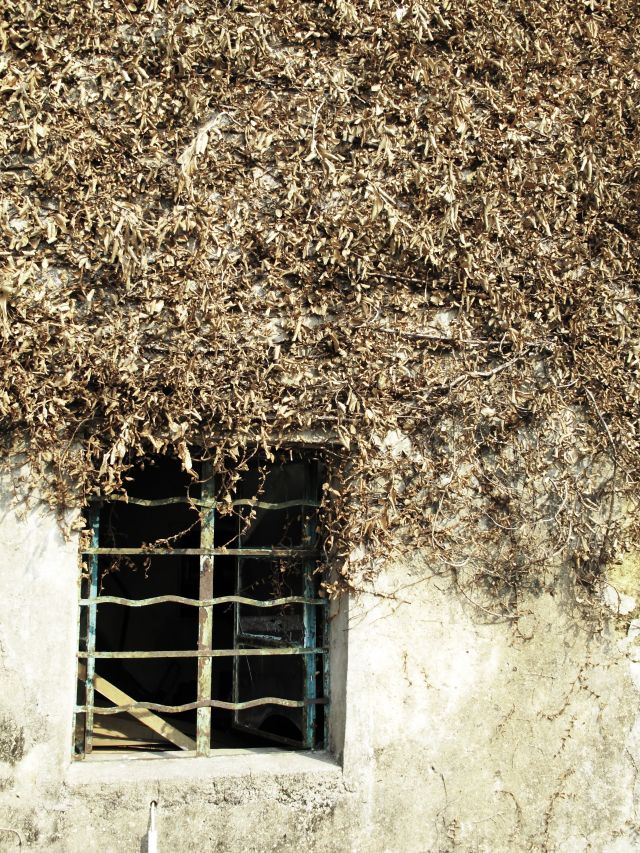
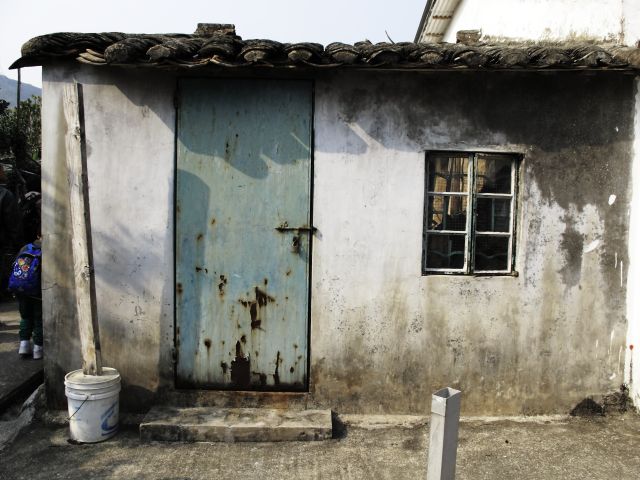
All photographs are taken at Ma On Shan, New Territories.

IMG_20140120_0001 640

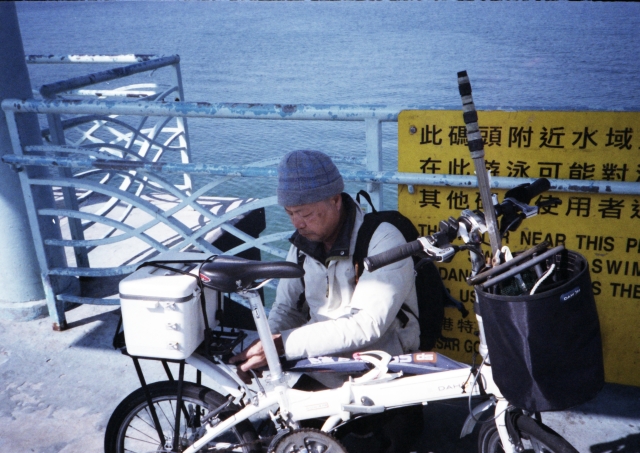
You’ll see people cycling, fishing and taking leisurely walks.

There are fast-paced days and there are slow-paced days.

Today, we’ll go slow.

IMG_20140117_0003 640
IMG_20140117_0004 640
The cycling route can be rather scenic.

IMG_20140116_0025 640
IMG_20140116_0034 640
There’s an often-mentioned creative writing strategy: when writing a poem about love, never use the word “love”.

This entry is about cycling with my son, without photographs of us cycling.

You can see our bikes in the background though.

IMG_20140116_0024 640

At moments like this, we slip into another time. You’ll see people enjoying being alone, in their own space-time bubbles.

IMG_20140116_0043 640
IMG_20140116_0046 640

This is the bike shop we go to when there’s something to the bikes I can’t fix. They’re really friendly and will actually tell me I don’t need that pair of fancy bike gloves when a generic one would do as well.

IMG_20140116_0027 640

My cynical self would think about the way they are setting up their profit margins. But they sometimes do minor repairs and maintenance for free as well.

The boss will just tell you it’s free of charge and please buy your next bicycle from him.

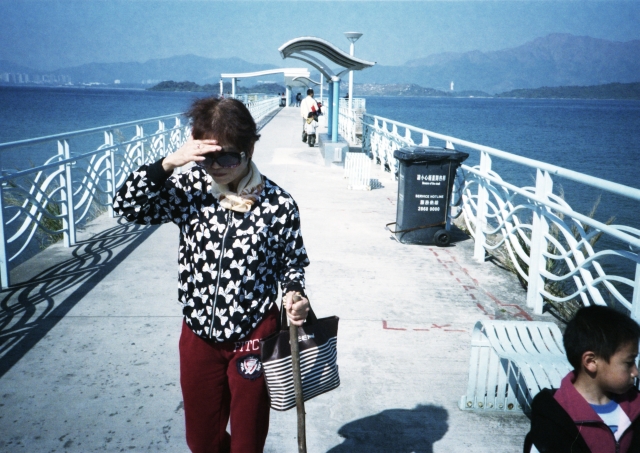
She was shielding her eyes from the sun, so naturally I brought my camera to my eye.

IMG_20140116_0050 640

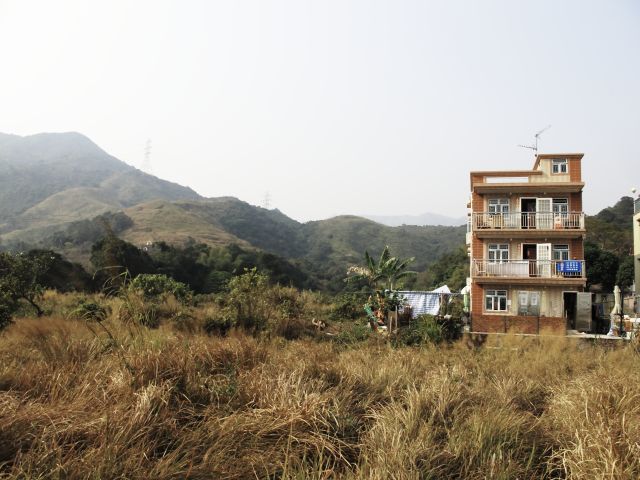
That’s at the end of Wu Kai Sha beach. You’ll see quite a number of village houses.

IMG_20140116_0049 640
IMG_20140116_0031 640

IMG_20140116_0040 640

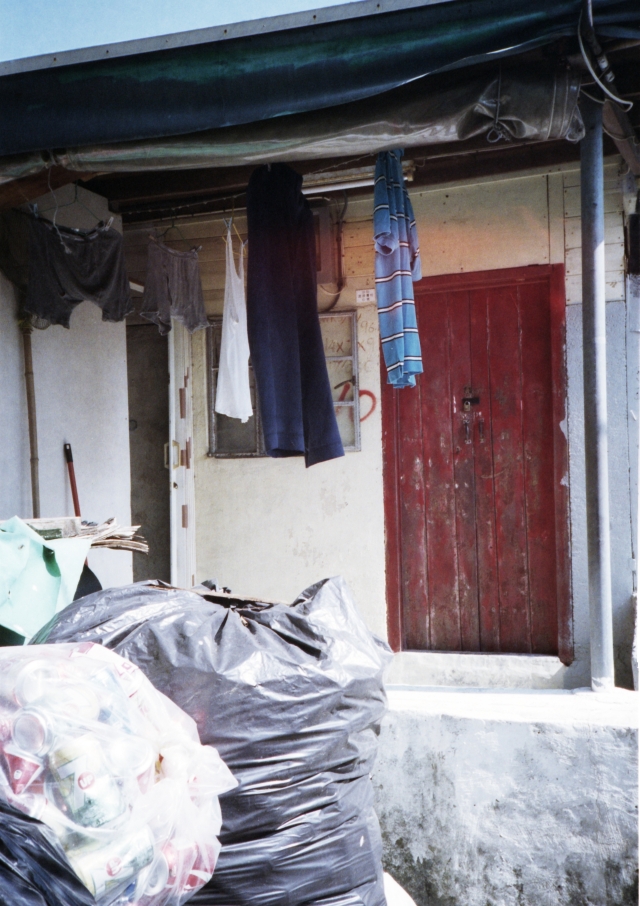
An open door.

IMG_20140116_0048 640

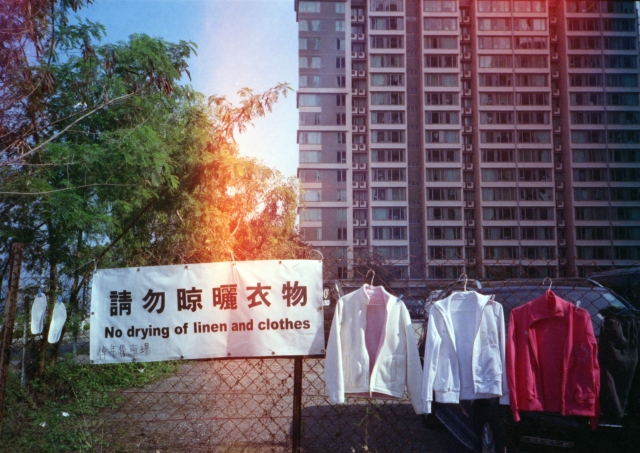
You could see the contrast between village life and high rise living here.

Hong Kong is a city of sharp juxtapositions.

IMG_20140116_0029 640

Thanks for reading!

Singapore Zoo

Yet another set of street photographs taken at in-between moments during a family outing at the Singapore Zoo a few months ago.

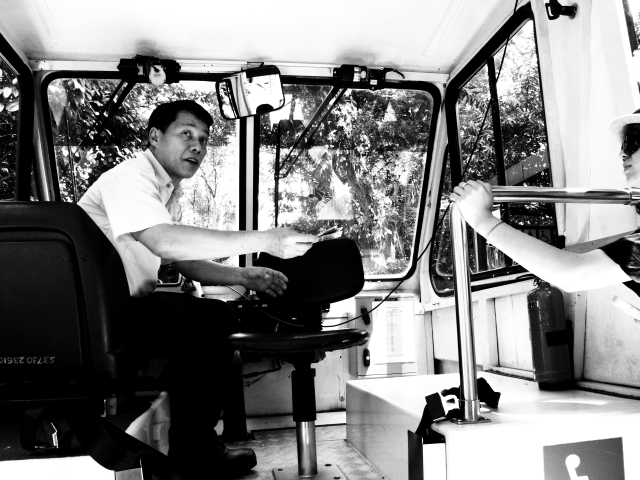
That’s our friendly and helpful tram driver.

IMG_5785 640

My son loves the pony ride.

I am a very talented photographer – through telepathy, I’ve managed to convince the person in the background to bend a little bit so as to be confluent to the pony handler’s face and shoulder outline.

IMG_5833 640

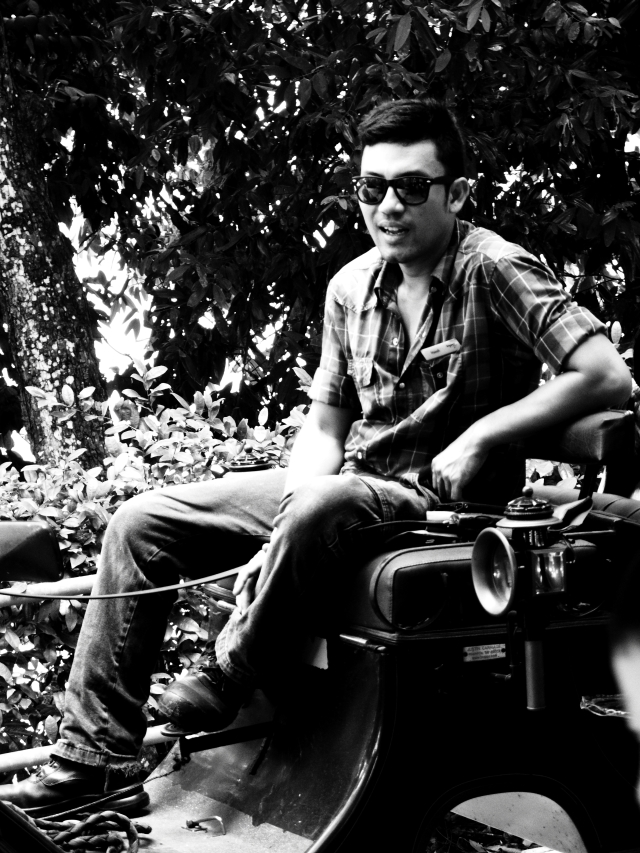
Here’s the horse carriage driver.

IMG_5858 640

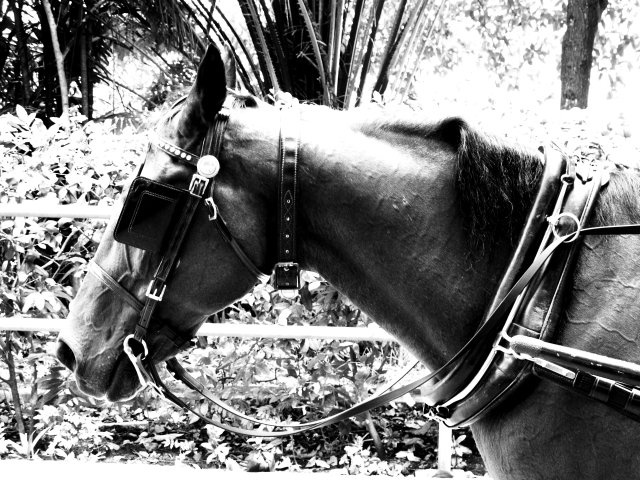
Here’s the horse.

IMG_5862 640

It’s interesting how high contrast monochrome changes things. The photographs look somewhat hard-edged and menacing at times …

Go to the zoo if you’re ever in Singapore. It’s really not so menacing …

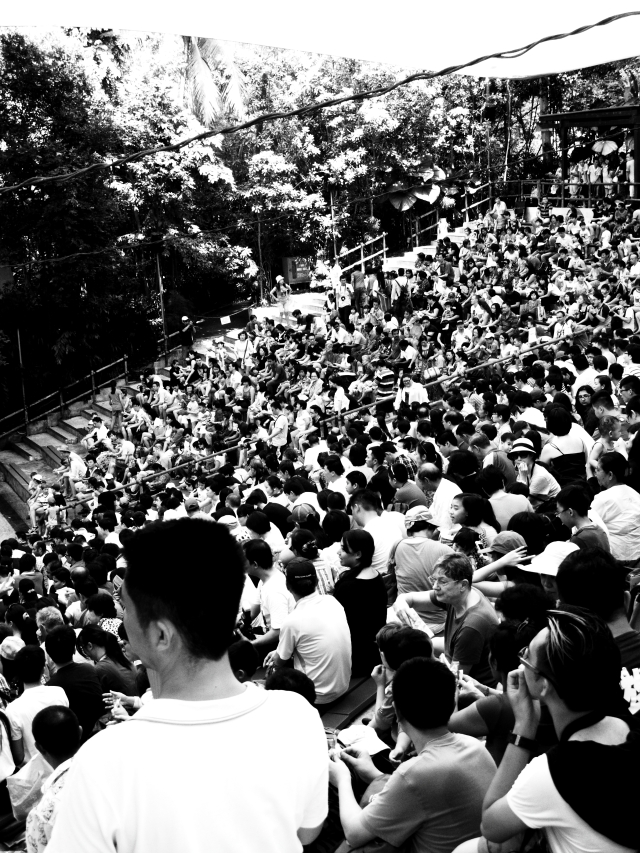
The crowd at an animal performance show.

We go to the zoo every time we’re back in Singapore.

So, I’ve seen the performance many times.

Now, instead of looking at the performance, I look at the crowd and think about how to photograph the human exhibits.

I am a very talented photographer – using telepathy, I’ve managed to convince a stranger to stand up so as to create a contrasting element to the crowd.

IMG_5800 640

That’s err… a bird animal creature with two legs and feathers…

IMG_5797 640

I suppose that’s my nod to Gary Winogrand‘s The Animals.

Thanks for reading!

Village Life in Hong Kong

This is the dilemma I face whenever we have a family outing.

Should I bring along my Leica M6, my Olympus XA2, Canonet or Yashica? Do the kids look like they’re going to give trouble? Are we going shopping which means I need a high ISO film?

At this point I would once again settle on my Canon G11 over the 600D. With a family in tow, I’ll go for a compact auto focus auto exposure digital everything because there’s usually no time to focus (in both senses of the word) if you’re looking to do a bit of street photography at in-between moments. I’ll bring along my Leica when the kids are older…

My daughter’s kindergarten organised an outing last Saturday for their students and their families. There was a huge turnout. Five gigantic bus loads.

Here’s our guide:

IMG_6476 640

She sings very well.

Here’s our driver:

IMG_6477 640

I was 2 seats behind and this is a reflection of him from the driver’s rear-view mirror between two curtains.

We were at a farm at Sha Tau Kok. It was a 20-minute walk to the farm and there were fascinating ruins.

IMG_6540 640

I think some of these are occupied.

IMG_6542 640

IMG_6552 640

IMG_6558 640

IMG_6559 640

IMG_6560 640

IMG_6563 640

There’s a certain socio-political economic situation to village houses in Hong Kong.

IMG_6581 640

IMG_6582 640

In land-scarce Hong Kong, villagers are given a plot of land to build a three-storey house in recognition of their indigenous status. They could remain as they are but a three-storey set-up means you could lease out two floors and live on the rent alone.

IMG_6586 640

Usually the villagers in a single village are related and have the same surname.

And they would set up small businesses. This area for example is a cycling, fishing, kite-flying and bbq area combined with a vegetable farm.

IMG_6519 640

IMG_6522 640

IMG_6524 640

IMG_6529 640

IMG_6567 640

When we say Hong Kong is short of land, we are thinking of built-up areas like Kowloon or Hong Kong island.

Sha Tau Kok where we were is huge and relatively sparsely populated. But it takes a certain character to enjoy life here I suppose.

IMG_6566 640

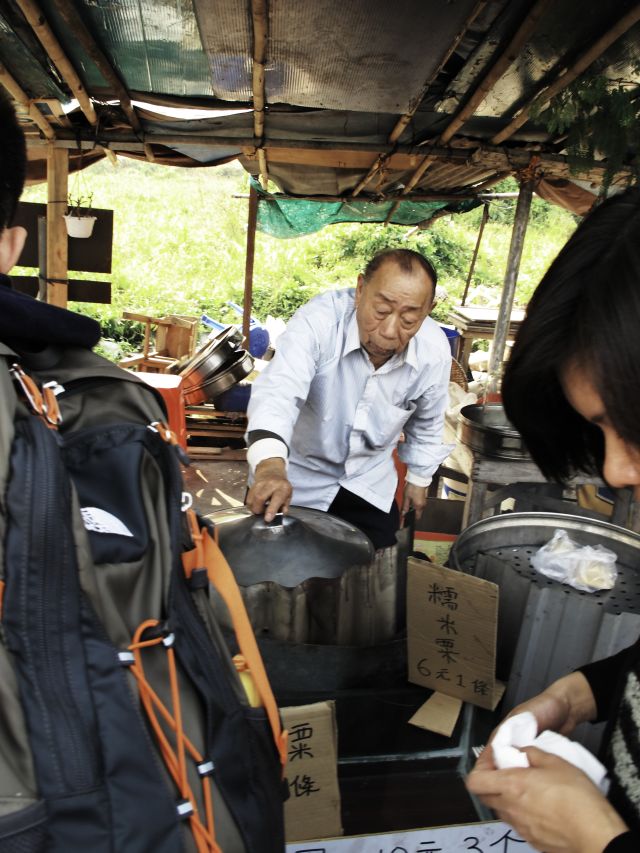
Here’s another village. I was told it’s a traditional Hakka village. Because these are popular sites for local excursions, the villagers have set up small stalls selling traditional snacks.

IMG_6588 640

IMG_6590 640

IMG_6597 640

The black blobs are called errr… “tiny chicken poop” in Cantonese. Yummy! I was told it’s good for my sore throat.

IMG_6605 640

Thanks for reading!

Sentosa Snapshots

I’ve been looking though images taken a few months ago in Singapore with my trusty Canon G11. It went through an overhaul and is now good as new.

Generally, on family outings, I bring along my G11 for family snapshots.

Usually, I make a division between street photography (film cameras only) and family pics (digital only) just to keep things simple. But life is not always simple.

I find myself in street photography mode often at various moments during family outings.

These were taken at Sentosa.

IMG_5744 640

I find the high-contrast Daido Moriyama style rather addictive.

IMG_5770 640

The scene looked so good I can’t resist another:

IMG_5771 640

I’m still waiting for my G11 to break down so as to have an excuse to get that Ricoh GR Digital.

More next time.

At Tsim Sha Tsui

Again, at Tsim Sha Tsui.

There’s so much happening here.

I don’t mean shopping and eating, though there’s lots of it too.

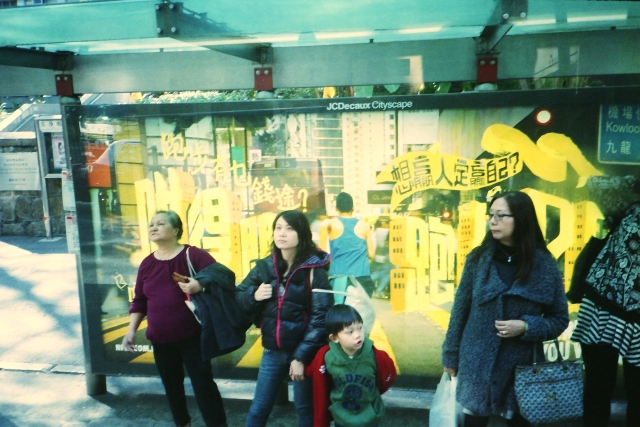
Sometimes we’re bored while waiting for the bus…

IMG_20131219_0008 640

But there’s so much to see …

IMG_20131219_0007 A4 640

I suppose it’s about framing and movement…

IMG_20131219_0032 640

There’re so many people at work.

IMG_20131219_0033 A4 640

I figured I could fire off two clicks before they notice me …

IMG_20131219_0046 A4 640

IMG_20131219_0039 A4 640

I simply love the lomography effect with Fuji Superia 800 film.

Thanks for reading today.

Beautiful Mistakes

Sometimes, mistakes can be surprising.

IMG_20131126_0014 A3 640

The focus is off, but the colours are there. There’s some kind of neon lighting that is projected onto the ceiling which changes every 10 seconds or so.

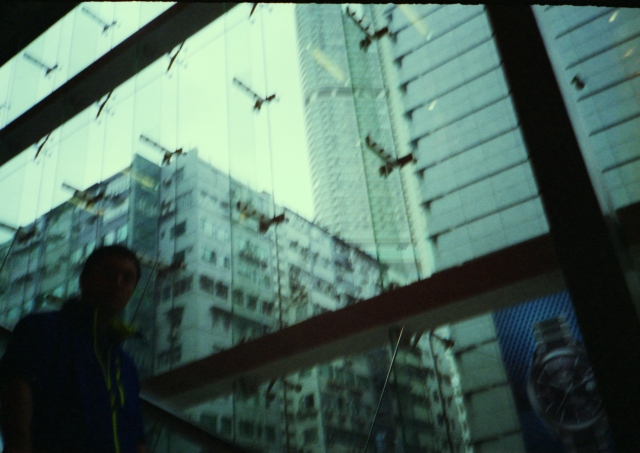
The above and below are taken in a shopping mall at TST near my church. No prizes for guessing which.

I was on an ascending escalator, trying to focus on those buildings outside the glass window and the gentleman entered the frame, descending from top left. It’s underexposed so we can’t really see the person, but the repetitions of the grid and the colours are there. The metal fasteners (is that what they’re called?) look like flying seagulls.

IMG_20131126_0013 A3 640

I’m not sure what went wrong with the photograph below. I think there’s motion blur and it’s overexposed… I don’t remember making this mistake…

I do this every Sunday on my way to church, to the taxi driver when he’s paying the toll at the Lion Rock tunnel.

IMG_20131126_0016 A3 640

In all honesty, I’ve done a bit of post-processing to heighten the colours. But I’ve spend no more than 3-5 minutes on each, simply going along with what the images are telling me, and only with levels and curves with the generic software that came with my scanner.

I suspect they’ll look gorgeous when printed with textured paper and mounted on non-glare glass.

Now I’m beginning to see the appeal of lomography, which is essentially about creating something beautiful from intuition, serendipity and “errors”. That’s the kind of artlessness in photography I’m drawn to…

Thanks for reading.

The Art of Life

I’m planning to use the following quote for a talk on poetry and photography for fellow writers.

It’s from Zygmunt Bauman, a sociologist who has written on what he calls “liquid modernity”. This passage from his book The Art of Life is relevant to those who are on the quest for meaning:

To practise the art of life, to make one’s life a “work of art”, amounts … to being in a state of permanent transformation, to perpetually self-redefine through becoming … someone other than one has been thus far. (The Art of Life 73)

I now have the habit of bringing along one or two film cameras wherever I go. It’s usually a Leica M6, paired with either a Yashica GX, Canonet QL 17 Giii or more recently, the Olympus XA2.

The Olympus XA2 is really stealthy because of zone-focusing. And it’s really quiet too. For example, I could do this in a cab without the driver noticing:

IMG_20131024_0005 A3 A4 640

Try that with a Canon 5D Mark III.

Part of my fascination with film cameras has to do with their longevity – digital cameras either go out of fashion or break down after 3-5 years (though it has to be said that my Canon G11 is still going strong). The Olympus XA2 was made in the 1980s, which means the thing in my hand is about 30 years old.

I guess I am now using my cameras as a sketchbook of sorts, storing material for writing and thinking. This is probably a little too deliberate, but I think of this as pushing myself beyond what I am, “becoming someone other than one has been thus far”, asking street photography to teach me to be a better writer and thinker.

For now, the art of life for me is about storing moments which might otherwise seem artless.

Lately, I have begun to take pictures with only my eyes, imagining what a scene would look like on a photograph… click… click…

And I like this quote from William Todd Schultz, who wrote An Emergency in Slow Motion: The Inner Life of Diane Arbus, a wonderful psychobiography of Arbus:

Artists aren’t always in complete command of their material. Sometimes it commands them and they let it; they get out of the way, the subject matter comes unbidden, it compels them and they follow its lead.

This might be a careless comparison, but Arbus is to photography what Sylvia Plath is to poetry.

And as for material for the street photographer, there’s often poetry to be found in places you least expect, which is why that tiny Olympus XA2 is so handy:

IMG_20131024_0024 A3 A4 640

The above is just next to where I live, a plot of land on which a small shopping mall is being built. *sigh*

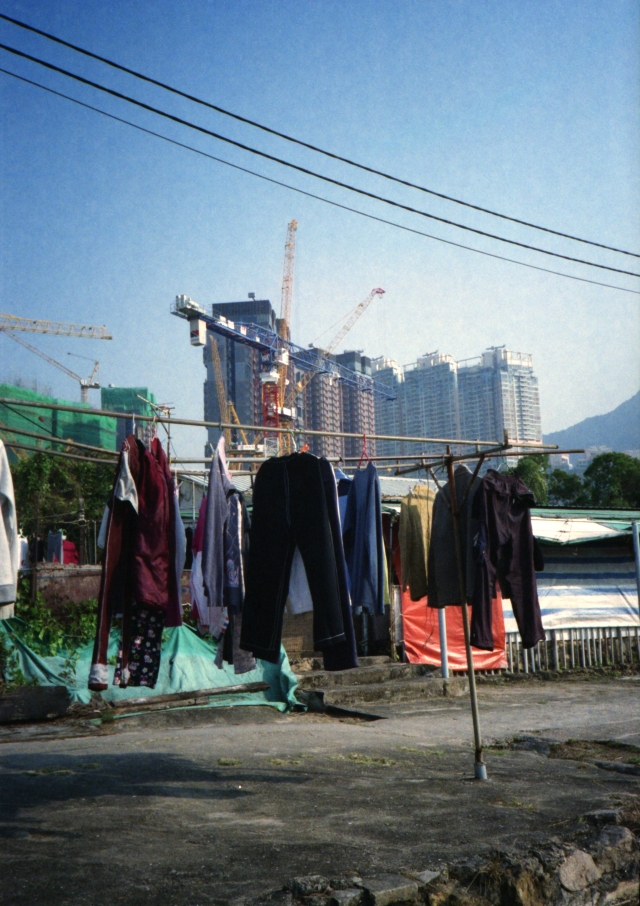
I’m always fascinated by how one could be in a built-up area in Hong Kong, and after walking for 20 minutes, be in the midst of idyllic village houses where clothes are hung in open air and kitchens are next to public walkways:

IMG_20131024_0042 A3 A4 640

IMG_20131024_0043 A3 A4 640

And then, 10 minutes later, one is at the beach.

IMG_20131024_0065 A3 A4 640

IMG_20131024_0066 A3 A4 640

And you would come across scenes like this:

IMG_20131024_0067 A3 A4 640

This is Wu Kai Sha beach, and there’re now plans for land reclamation in the area which would mean the beach would be no more… *another sigh*

Thanks for reading.

Street Market and Printing

Though all the images here are created with film cameras, they are of course scanned from negatives and ultimately, on display here are digitised images on a computer monitor.

IMG_20130913_0002 A3 adjusted A4 640

I’ve been experimenting with colours lately, having bought a dedicated pigment ink photo printer and various Ilford and Harman papers.

It really does make a difference whether the image is printed on glossy or on matte, etc. And of course, I am going to frame them up, now that I’ve finally gotten my hands on photo-safe tape.

Images like the one below work on both matte and gloss. On matte, there is a gritty look which fits in with the grungy seat-of-the-pants attitude of street photography.

IMG_20130913_0001 adjusted A3 A4 640

A colleague who used to paint commented that the matte print looks more like a painting than a photograph. He said there’s a Caravaggio framed-by-darkness quality to it.

On the other hand, the glossy print has what I think of as a “Nirvana in Carnegie Hall” effect… a refined “fine art” treatment to street photography.

IMG_20130913_0001_ adjusted A3 A4 640

I suppose glossy is good for portraying drama in ordinary scenes.

And now that I’ve got all of these, I’m now thinking of what I should do next. Where is this taking me?

Direction 1: Teaching and Research

A fascination with photography (and film cameras, I must admit) is now changing the way I work. I find myself making connections between photography and creative writing, between the history of art and literary history. Is there a homology between creative writers and photographers?

What would a university course on the connections between photography and literature look like?

I am now thinking of creating a course that is practice-based, one that encourages students to go out and explore HK culture using literary and non-literary writing and photography, and getting them to think about what constitutes valuable cultural knowledge.

I’ll probably throw social media (such as a WordPress blog like this) into the mix, getting them to think about the use of social media for sharing one’s work. And what is meant by “sharing”? What, really, is being shared? And what is “work”?

Direction 2:

This has all to do with the situation of one’s work, I suppose. Digital images live in one’s hard disks or are displayed on sites like this. Now that I have the physical prints on hand, perhaps the next step is to work towards a gallery exhibition.

It’s a kind of curating, I suppose, setting up one’s work for viewing …

IMG_20130906_0006 A3 adjusted A4 640

What kind of logistics and various other considerations would this involve? There’s a learning curve ahead of me …

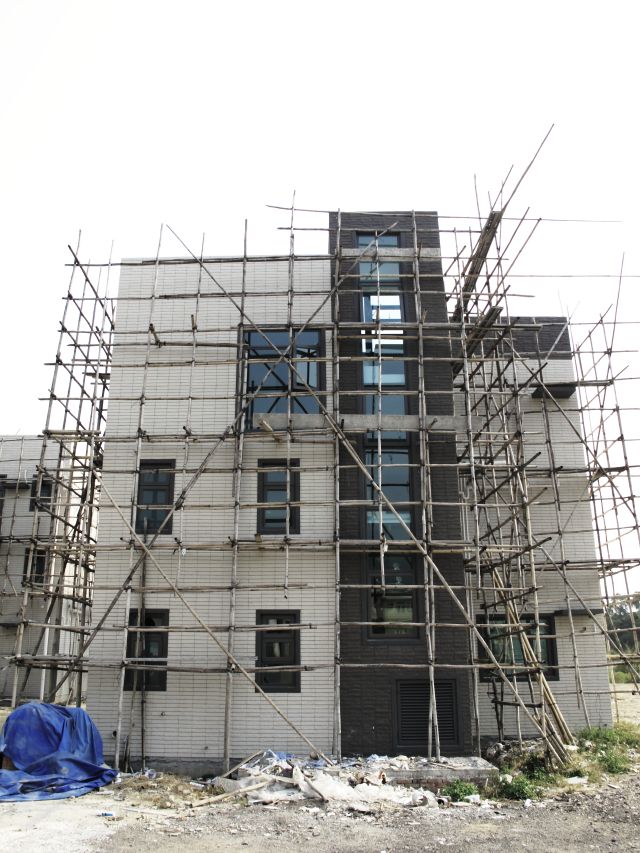
What is becoming clear to me now though, is that this blog is like a thinking-in-progress technology, a depository of raw ideas… much like a building under construction …

IMG_20130913_0003 adjusted A3 A4 640

Thanks for reading.
Ode to Public Laundry

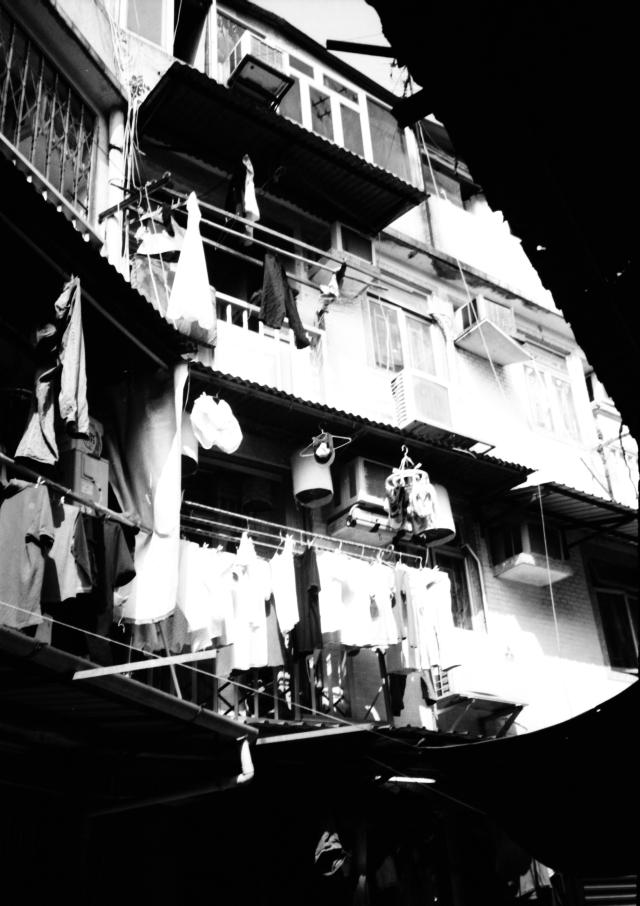
I guess this is a common sight in quite a few places in Hong Kong:

IMG_20131010_0038 A3 A4 640

On the one hand, there are those who say this is unsightly, and that there should be awareness campaigns against airing/drying one’s laundry in public.

After all, it looks too much like a ghetto, and is offensive to middle-class tastes.

(It might bring down property prices.)

IMG_20131010_0043 A3 A4 640

On the other hand, it speaks of the “can do” spirit of people, who make do with tiny living spaces in Hong Kong.

There is a kind of symphony here of public laundry.
IMG_20131010_0039 A3 A4 640

There is a kind of charm in the way the clothes are being hung… perhaps there is a sense of community here in the way the space is being shared.

Not everyone has dryers at home… and after all, clothes dried in the sun has the smell of sunshine in them.

IMG_20131010_0062 A3 A4 640

And sometimes, it can get a little creative:

IMG_20131008_0044 A3 A4 640

There are public spaces. There are private spaces.

And perhaps there are in-between shared social spaces with streets that are peopled even if there are no people around…